| Title |
Issues Paper, Central Utah Project |
| Description |
Major publication compiled by Dorothy Harvey for the Citizens for a Responsible Central Utah Project; From The Dorothy Harvey papers (1902-2005), a collection of materials focusing on the Central Utah Project (CUP), a water resource development program to use Utah's alloted share of the Colorado River. Includes correspondence, Harvey's writing drafts and notes for an unpublished book on the CUP, federal documents, project litigation materials, subject files, news clippings, newsletters, programs, brochures, and maps. |
| Subject |
Central Utah Project; Rivers--Environmental aspects--Utah; Water resources development --Environmental aspects--Utah; Irrigation--Environmental aspects--Utah; Water-supply--Utah--Salt Lake County |
| Creator |
Harvey, Dorothy |
| Contributor |
Citizens for a Responsible Central Utah Project; Power, Thomas M.; Hughes, Trevor C.; Van Dam, R. Paul |
| Alternate Title |
Economic analysis of the Bonneville Unit of the Central Utah Project, Bureau of Reclamation; Feasibility of accelerating construction of the Central Utah Project; Water resources of Salt Lake County: an alternative view |
| Additional Information |
Includes as parts of this work: An economic analysis of the Bonneville Unit of the Central Utah Project, Bureau of Reclamation, by Thomas M. Power (68 p., June 1978); Feasibility of accelerating construction of the Central Utah Project, by Trevor C. Hughes, L. Douglas James, Frank Haws, C. Earl Israelsen (27 p., Jan. 16, 1978); Water resources of Salt Lake County: an alternative view, by R. Paul Van Dam (19 p., April 3, 1978); Interim report on CUP Bonneville Unit by R. Paul Van Dam (7 p., July 5, 1977); Statement of Gerald Kinghorn, Salt Lake Asst. Co. Attorney (7 p., 1977); Letter of R. Paul Van Dam to Arthur L. Monson (15 p., Nov. 18, 1977) |
| Spatial Coverage |
Colorado River Basin (Colo.-Mexico); Duchesne River (Utah); Uinta Mountains (Utah); Uinta Basin (Utah and Colo.); Rock Creek (Duchesne County, Utah); Lower Stillwater Reservoir (Utah); Upper Stillwater Reservoir (Utah); Bottle Hollow Reservoir (Utah); Starvation Reservoir (Utah); Currant Creek Reservoir (Utah); Jordanelle Reservoir (Utah); Strawberry Reservoir (Utah); Utah Lake (Utah); Utah County (Utah); Salt Lake County (Utah); Duchesne County (Utah) |
| Collection Number and Name |
Accn2232 bx 58 fd 5; Dorothy Harvey papers |
| Rights Management |
Digital Image Copyright 2009, University of Utah. All Rights Reserved. |
| Holding Institution |
J. Willard Marriott Library, University of Utah |
| Date |
1978 |
| Digitization Specifications |
Original scanned on Epson Expression 10000 XL and saved as 400 ppi TIFF. Display image generated by CONTENTdm. |
| Publisher |
Digitized by J. Willard Marriott Library, University of Utah |
| Type |
Text |
| ARK |
ark:/87278/s6cc0zmc |
| Setname |
wwdl_neh |
| ID |
1149704 |
| Reference URL |
https://collections.lib.utah.edu/ark:/87278/s6cc0zmc |
| Title |
Page 166 |
| Setname |
wwdl_neh |
| ID |
1149654 |
| OCR Text |
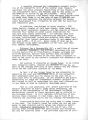
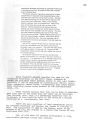
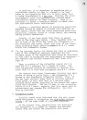
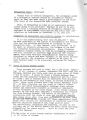
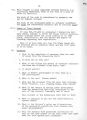
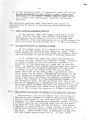
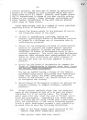
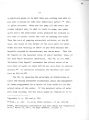
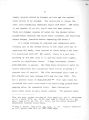
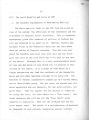
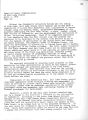
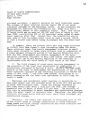
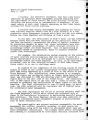
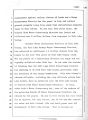
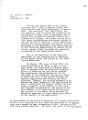
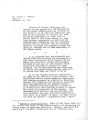
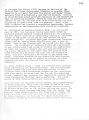
Show AT/ Board of County Commissioners of Salt Lake County April 3, 1978 Page six County well past the year 2020 without additional major capital investment for trans-basin diversion facilities. With or without the Strawberry collection system of the Bonneville Unit, the proper management of the water resources of Salt Lake County should be a major objective of both municipal and county governments. Waste, inefficient use, or under-utiliza- I tion of this precious resource should not be tolerated. The time for beginning the massive undertaking of efficient water management has arrived. The questions raised in the ongoing adjudication ot water rights in Salt Lake County, the water resource study conducted by the USGS, the Salt Lake County 208 Water Quality Study and the recent Utah State University report, should no longer be the subject for opinionated debate. Those questions should be addressed and answered. If the current water resource managers are unable or unwilling to do so, then the local and state government should undertake the task of providing an adequate supply of water for the future at the lowest possible cost. The Bonneville Unit of the CUP is finally, according to our Congressional delegation, a sure thing. In the past it was also a sure thing, but has fallen behind schedule due to lack of funding during the late 1960's and delays due to design changes. While it is a sure thing today, it may not be guaranteed tomorrow. Recent reports of a cutback on funding by the current administration, possible withdrawal of support by the Ute Indians and new demands for water in the Colorado basin bear this out Therefore, independent of the Bonneville Unit, Salt Lake County should undertake aggressive water resource planning and management m order to provide an insured supply based upon resources locally controlled, rather than on resources controlled by the federal government which are dependent upon the continuing funding by the federal government for development. Another aspect of the Bonneville Unit which makes development I of local resources and their full utilization an important task is the statewide water resources picture. According to the 1975 btate Water Plan, the Colorado River is already over-appropriated. Water \ needs in Utah's part of the Colorado Basin for agriculture, domestic use, and power generation are unfilled while current plans call for further diminution of the resources of that basin. Meetings with the Bureau of Reclamation and the Central Utah Water CoSservancy District indicate that one of the strengths ot the Central Utah Project is it's flexibility. In fact, the project appears to be in a nearly constant state of flux with reformulation and redesign going on almost daily. This flexibility could be# used to the advantage of the people of Utah on a statewide basis |
| Reference URL |
https://collections.lib.utah.edu/ark:/87278/s6cc0zmc/1149654 |