| Title |
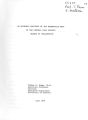
Issues Paper, Central Utah Project |
| Description |
Major publication compiled by Dorothy Harvey for the Citizens for a Responsible Central Utah Project; From The Dorothy Harvey papers (1902-2005), a collection of materials focusing on the Central Utah Project (CUP), a water resource development program to use Utah's alloted share of the Colorado River. Includes correspondence, Harvey's writing drafts and notes for an unpublished book on the CUP, federal documents, project litigation materials, subject files, news clippings, newsletters, programs, brochures, and maps. |
| Subject |
Central Utah Project; Rivers--Environmental aspects--Utah; Water resources development --Environmental aspects--Utah; Irrigation--Environmental aspects--Utah; Water-supply--Utah--Salt Lake County |
| Creator |
Harvey, Dorothy |
| Contributor |
Citizens for a Responsible Central Utah Project; Power, Thomas M.; Hughes, Trevor C.; Van Dam, R. Paul |
| Alternate Title |
Economic analysis of the Bonneville Unit of the Central Utah Project, Bureau of Reclamation; Feasibility of accelerating construction of the Central Utah Project; Water resources of Salt Lake County: an alternative view |
| Additional Information |
Includes as parts of this work: An economic analysis of the Bonneville Unit of the Central Utah Project, Bureau of Reclamation, by Thomas M. Power (68 p., June 1978); Feasibility of accelerating construction of the Central Utah Project, by Trevor C. Hughes, L. Douglas James, Frank Haws, C. Earl Israelsen (27 p., Jan. 16, 1978); Water resources of Salt Lake County: an alternative view, by R. Paul Van Dam (19 p., April 3, 1978); Interim report on CUP Bonneville Unit by R. Paul Van Dam (7 p., July 5, 1977); Statement of Gerald Kinghorn, Salt Lake Asst. Co. Attorney (7 p., 1977); Letter of R. Paul Van Dam to Arthur L. Monson (15 p., Nov. 18, 1977) |
| Spatial Coverage |
Colorado River Basin (Colo.-Mexico); Duchesne River (Utah); Uinta Mountains (Utah); Uinta Basin (Utah and Colo.); Rock Creek (Duchesne County, Utah); Lower Stillwater Reservoir (Utah); Upper Stillwater Reservoir (Utah); Bottle Hollow Reservoir (Utah); Starvation Reservoir (Utah); Currant Creek Reservoir (Utah); Jordanelle Reservoir (Utah); Strawberry Reservoir (Utah); Utah Lake (Utah); Utah County (Utah); Salt Lake County (Utah); Duchesne County (Utah) |
| Collection Number and Name |
Accn2232 bx 58 fd 5; Dorothy Harvey papers |
| Rights Management |
Digital Image Copyright 2009, University of Utah. All Rights Reserved. |
| Holding Institution |
J. Willard Marriott Library, University of Utah |
| Date |
1978 |
| Digitization Specifications |
Original scanned on Epson Expression 10000 XL and saved as 400 ppi TIFF. Display image generated by CONTENTdm. |
| Publisher |
Digitized by J. Willard Marriott Library, University of Utah |
| Type |
Text |
| ARK |
ark:/87278/s6cc0zmc |
| Setname |
wwdl_neh |
| ID |
1149704 |
| Reference URL |
https://collections.lib.utah.edu/ark:/87278/s6cc0zmc |
| Title |
Page 88 |
| Setname |
wwdl_neh |
| ID |
1149576 |
| OCR Text |
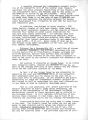
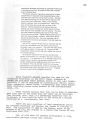
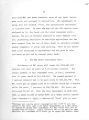
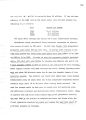
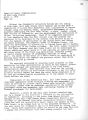
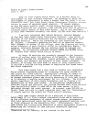
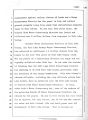
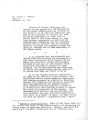
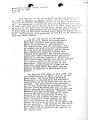
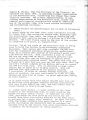
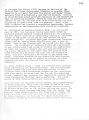
Show Si. 26 of estimated costs at 7 percent capital costs could be as high as $31,000,000.* To suggest that the BR may be trying to build the CUP well before it is needed is not a charge made lightly. Not only does the M§I water supply and demand data suggest that this is the case, but BR past performance also warns of this possibility. The BR Weber Basin Project was built twenty-three years ago. It services the area just to the north of Salt Lake County. At the time it was built, it was projected that 50,000 af of mi water would be sold and that 150,000 af of agricultural water would be used. The project was also to protect the area in times of drought. Twenty-three years later, 30 percent of the M§I water remains to be sold to subcontractors and one-third of the agricultural water goes unused The local part of the repayment of the federal investment can be met only because the Weber Basin Water Conservation District can levy an ad valorem property tax to force all residents to pay for the unneeded water. This, combined with urban growth and reevaluation of property values, has bailed out the project. In addition, the Weber Basin was not saved from drought by the project. In 1977, they sought and obtained $4,300,000 in federal emergency drought relief to move water from where the project stored it to where it could be Ibid. , p. 25, 1977 prices. |
| Reference URL |
https://collections.lib.utah.edu/ark:/87278/s6cc0zmc/1149576 |