| OCR Text |
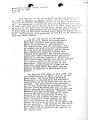
Show /cc Board of County Commissioners of Salt Lake County April 3, 1978 Page thirteen 70,000 acre feet from the aquifers which may be possible through a coordinated, countywide management system employing artificial recharge. Furthermore, these figures do not include the fact that on a short term basis of from one to three years, the aquifer could produce as much as 100,000 acre feet in addition to that now pumped, providing a valuable emergency reservoir for drought years such as 1977. Third, Wasatch Front streams are an attractive source of additional water. These high quality streams provide, on a mean-annual basis, a combined flow of nearly 150,000 acre feet. Currently, only about 75,000 acre feet are used for municipal supply. Nearly 40,000 acre feet goes to irrigation diversions and the remaining 35,000 acre feet flows unutilized into the Great Salt Lake. The water which goes unused and the high quality water used for irrigation result in a total of 75,000 acre feet annually not being put to its best and highest use. By undertaking a series of water rights exchanges and forfeitures of unused agricultural water, the County could benefit from this low cost source. And, by coordinating this source with a groundwater management/recharge program, most of the water now lost to the Great Salt Lake could be put to beneficial use without major capital expenditures. Fourth, a frequently overlooked source of water connected with the Wasatch Front streams is the on-again, off-again Little Dell Reservoir in Parley's Canyon. This facility alone could provide as much as 30,000 acre feet of the high quality Wasatch Front stream water mentioned above. In addition, Deer Creek Reservoir could be put to better use by fully developing the 61,700 acre feet of water held by the Metropolitan Water District. Currently, only one-third of that entitlement is used by Salt Lake City and Salt Lake County each year, with the remaining 40,000 acre feet being reserved (and frequently lost through spillage) for water poor years. With an improved use of the groundwater aquifers, an expanded Deer Creek, a scaled down Jordanelle, or a Little Dell Reservoir, this surplus could be fully developed, yielding an additional 40,000 acre feet annually to the 30,000 acre feet of Little Dell water for a total of 70,000 acre feet. Fifth, a resource which could be developed through improved utilization of existing water resources which emphasizes the management approach to water development is canal lining. The USGS estimated that the major canals in Salt Lake County lose some 50,000 acre feet of water annually to seepage. These canals total some 172 miles in length; however, only the most porous sections would need to be lined to recover these 50,000 acre feet of water, |