| OCR Text |
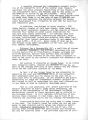
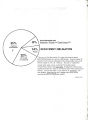
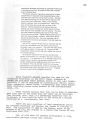
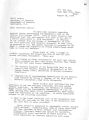
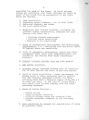
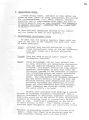
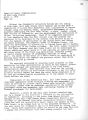
Show I&7 Board of County Commissioners of Salt Lake County April 3, 1978 Page fourteen a portion of which is high quality. Sixth, over the longer run, there are two additional major potential sources of supply which have been overlooked or not adequately investigated. The first of these sources involves the conversion of unused irrigation waters to municipal or industrial use. A recent report issued by the Salt Lake County 208 Project indicates that, of the 340,000 acre feet of water diverted for agricultural and stockwatering use in the County, as much as 35% or 125,000 acre feet is being wasted at the present time. While this figure has been hotly contested, it is clear that urban county growth will continue to overtake irrigated land, causing^ the agricultural needs to decrease and eventually become insignificant. Of the 340,000 acre feet diverted for agricultural use, as much as 70,000 acre feet is high quality water (including 40,000 of Wasatch Front stream water), suitable for direct use as municipal supplies. The remainder of the agricultural water which will become available as growth continues could potentially be treated as new water treatment technology becomes available. Or this water could be traded back upstream to its high quality origins and stored in an expanded Deer Creek Reservoir or a scaled-down, state funded Jordanelle Reservoir. This source of water involves some complicated water rights and water quality problems. However, in view of the vast potential of this resource- 340,000 acre feet-I strongly feel that it should no longer be ignored as a solution to the County's long range needs. The attractiveness of developing this volume of water becomes apparent when it is realized that the Bureau of Reclamation will spend more than one-quarter of a billion dollars to develop 100,000 acre feet of municipal water through the Strawberry collection system, the Jordanelle Reservoir, and diking of Utah Lake. The potential for expanded use of dual water systems to enable use of agricultural waters for outside lawn watering in future parks and subdivisions should be explored to further reduce the demand for culinary waters. There are also other sources of water which exhibit significant, but generally ignored, long range potentials for Salt Lake County. In many parts of the country, reclamation/reuse of treated wastewater has been recognized as a valuable resource for industrial, agricultural, and even culinary needs. While the direct reuse of treated wastewater is only a potential resource, the magnitude of this resource requires that it no longer be ignored in the water supply picture. Currently, the Salt Lake County 208 study is recommending regional waste treatment facilities which will raise all effluents to secondary treatment standards. In addition, plans are underway to improve these effluents to |