| OCR Text |
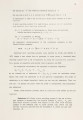
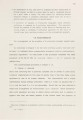
Show 89 solut ion for these equations, if one exists, is of the form {x1 = s1, x2 == s2, ... , xm == s } where x.'s are variables appearing in the given terms and s 's are terms. m I I From the ori ginal simultaneous equations to the solution, a series of transfer-mations on equations is involved. Martelli and Montanari extended this idea further to the one of solving systems of multiequations [83], and demonstrated t hat their algorithm was prac-tically more efficient t han other existing algorithms. Since our algorithm is an embedding of narrow ing into the transfo rmation of multiequations, we now ex-plain various noti ons used in the tra nsformation. 1) Multiequation : A multieq uation is an equation N = M w here N , the lef-thand side, is a set of va riables and M, the righthand side, is a set of nonvari - able terms. Terms and v ariabl es in such a set, called a multiset, are meant to be equivalent, up to substit utio ns. Martelli and Montanari's algorithm is based on the idea of equivalence-preserving transformations on sets of multiequa-tions. 2) Common part: The common part C of a multiset of terms is a term that · is "common" to each term in the set. For instance, given the multiset of terms {f(g(a, f(x)), z), f(g(x, f(a)), f{y)), f(g(y, z), f(a))}, the common part is f(g(x, z), z). 3) Frontier: The frontier F of a multiset is the set of multiequations derived in computing the corresponding common part; the set of multiequations actually represent a set of substitutions by which each term in the multiset can be restored. The frontier that corresponds to the above common part is: { {x,y} = {a}, {z} = {f(x), f(a)}, {z} = {f(y), f(a)} }. 4) Compactification: Two multiequations can be merged if the intersect ion of the lefthand sides is not empty. If N 1 = M 1 and N2 = M2 are two equations, and N 1 n N 2 #- QJ, then the compactification yields N1 u N2 == M1 u M 2. |