| OCR Text |
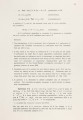
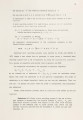
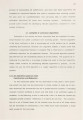
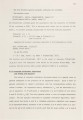
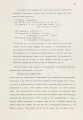
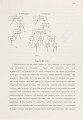
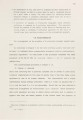
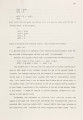
Show (a} v1(H(P,Q}} = 80 - >r k l 81 - > ... - >r k I B = H(R,R}, ua, 0 un- 1' n- 1 n does there exist another unifier Y/', Yi' ~e Yi [V(H(P,Q}}], and a reduction sequence (b) v((H(P,Q}} = C0 - > [ . 1 C1 - > ... - > [ 1 C = H(R',R'}, va, Jo vm-1·lm-1 m such that none of addresses vi's is an address inherited from r/? 44 If the answer to this question is positive, then narrowing can yield a complete E-unification algorithm for the equational theory described by this term rewrit-ing system. The next chapter is devoted to a positive answer to this question for some subclasses of closed linear term rewriting systems. 3.5 Summary Although E-unification has been studied by several researchers over the last decade, the fundamental question of whether there exists a complete E-unification algorithm for an arbitrary equational theory has not been answered. This question is answered in this chapter by constructing an E-unification algo-rithm that is complete for all equational theories. Two results immediately fol-low: (a} the problem of first-order unification in equational theories is semi-decidable; and (b) the sets of (first-order) unifiers are recursively enumerable. The generality and limitations of narrowing were discussed. Coun-terexamples were presented which showed that narrowing failed to yield a complete unification algorithm in some cases. Another indication of these counterexamples is that the kind of term rewriting systems for which narrowing fails to generate a complete E-unification algorithm are not typical; rather, they seem to be pathological. |