| OCR Text |
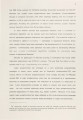
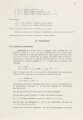
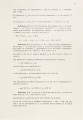
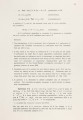
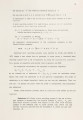
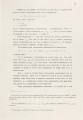
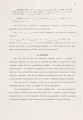
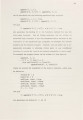
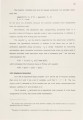
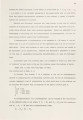
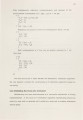
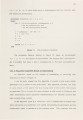
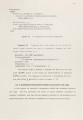
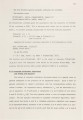
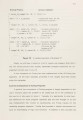
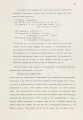
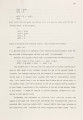
Show CHAPTER 2 UNIFICATION IN EQUATIONAL THEORIES This chapter is intended to provide the background concerning unification necessary for the development in later chapters. Some of the important defini-tions and results in E-unification are reviewed, upon which the results of this thesis are based. In addition, a summary of the use of mathematical symbols is provided for the reader's convenience in Section 2.2.2. 2.1 Introduction to Unification in Equational Theories As was alluded to earlier, the problem of unification is to determine if two given terms have a common instance, and if so, to provide a substitution for the variables in the terms that produces the most general common instance. Let us first consider the case of ordinary unification, i.e., unification in free terms. Free terms are built from a given set of function symbols and a set of variables. Let f, g and a be function symbols and let x, y and z be variables. Consider the unification of the following two terms: t1 = f(x, g(a, z)) t 2 = f(g(y, z), x). The problem is to find a substitution such that when the substitution is applied to both terms, the resulting terms are identical. The problem of unification can be viewed as one of solving equations. For example, the problem of unifying t 1 and t 2 is to solve the equation {f(x, g(a, z)) = f(g(y, z), x)}. Since we have the same outermost function symbol in both sides, solving this equation is equivalent to solving the following two simultaneous equations |