| OCR Text |
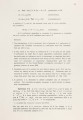
Show 40 Notice that even if a term rewriting system is nonterminating, superposi - tion can still be used to "expand" a given term rewriting system, without impos-ing any partial orderings on terms, though this may result in an infinite expan-sian process. 3.4 Discussion of the Generality of Narrowing It was shown in [31 , 51] that narrowing provides a complete E-unification procedure for canonical rewriting systems. Due to the attractiveness of narrow-ing, we would now like to know if there are other classes of term rewriting sys-terns for which narrowing is complete. Notice that we have assumed that we would like to work only with rewrite rules, because using two-way equations can easily result in the generation of useless derivations and yield loops that cause nontermination. This is particularly true when we deal with a large number of equations rather than a few equations.* This assumption becomes indis-pensable when one considers using such unification procedures for program-ming purposes. Under this assumption, we are actually developing unification algorithms for term rewriting systems that describe some equational theories. Now, is Algorithm 3 still complete for all confluent term rewriting systems if we do not use the term-construction process? The answer is no. The follow-ing example is provided by Henschen [41] modified for the discussion here. Consider a term rewriting system R = { }. g(a, f(b), f(c)) - > g(b, f(b), f(c)) g(b, f(b), f(c)) - > g(a, f(b), f(c)) b -> c c -> b It is easy to see that R is confluent, but not terminating. Now, we would like to unify g(a,x,x) and g(b,x,x). Although there exists an E-unifier tr = {x <- f(b)}, * But research that enables complete sets of reductions to be obtained for some important theories, e.g., [89], is invaluable. |