| OCR Text |
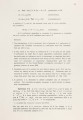
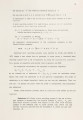
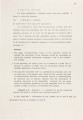
Show Since the sole reduction works on a subterm introduced by the unifier, we want to remove it by a major transformation step. In doing so, we get the new unifier ~, = {x1 <- c(a), x 2 <- c(a)}, and the trans formed reduction sequence: ~ ' H(g(x 1 ,x 1 ), g(x2,c(x2 ))) = H(g(c(a), c(a)), g(c(a), c(c(a)))) - > 1 2 1 H(g(c(a), c(c(a))), g(c(a), c(c(a)))) = H(R',R'), where the extra reduction is added by Step 4 of the transformation . Once again the address 1.2.1 represents a copy of some subterm in ~ '. It is obvious that the process of re peated ly applying the transfer-mation is not going to terminate. It is interesting to note that t hi s simple term rewriting system is trivially closed and linear, and t hat the narrowing method does not produce any E-u nifier f or g(x1,x1) and g(x2,c(x2)), though they do have an E-unifier as illu strated earlier. 0 66 The above example shows that there exists a (closed linear) term rewriting system for which the t ransformation defined in this chapter fails to termi nate. This example, however, also indicates that, for those {closed linear) term rewrit - ing systems that the transformation fails to terminate, the narrowing process is probably not powerful enough to yield a complete unification algorithm. 4.3 Completeness The following theorem is a variant of Theorem 2-10 described in Chapter 2 in that the condition that the substitution v1 be normalized is eliminated. Theorem 4-16: Let R be a closed linear term rewriting system. Let C be any term, V be a finite set of variables containing V(C), and ., be a substitution with D{v1) ~ V(C). For any ->-derivation issuing from VI( C): v1(C) = 8o ->[u 0 ,k 0 ] 81 ->[u 1 ,k 1 ] 82 -> ... ->[u k 1 8n n-1 ' n- 1 where none of the ui's is a residue of any address in U(.,), there exists a ->-derivation issuing from C: c = c -> c -> c --> -> c 0 [u0,k0,p0 ] 1 [u 1,k1,p1 1 2 ··· [un _1,kn-l'Pn-l 1 n and for each i in [O,n], a substitution .,. and a finite set of va riables v. I I |