| OCR Text |
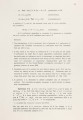
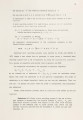
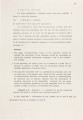
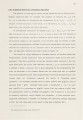
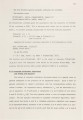
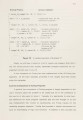
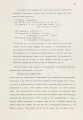
Show Since R1 "#= R 2 , in order to make them identical, Step 4 generates a sequence as follows: H(h(c(a,h(a))}, h(c(a,h(b)))) - > 2.1 2.1 H(h(c(a,h(a))), h(c(a,h(a}))) = H(R',R'). Notice that the address 2.1.2.1 represents a copy of the subterm b of h(b), where h(b) is the substitution for the variable x2 in rr ' . Thus another major transformation step is needed. After this step of trans formation, we obta in the pair < S", rr" > , where none of the addresses along S" is a residue of any address in U(rr " ). 0 Theorem 4-15: Consider a closed I i near term rewriting system R with the nonrepetition property, and a uni fi er rr for P and 0. Let H be a function symbol not in F. For any redu ction sequence (I) rrH(P,Q) = A0 -> A1 -> A2 -> ... - > An = H(R,R) uO u1 un - 1 t here exists a unifier rr ' = {x1 < - t 1, ... , xk <- t k} ' rr ' =E rr , and a red uction sequence (II) rr 'H(P,Q) = A'0 - > u'o A'1 - > , A'2 - > ... - > , A' n' = H(R',R') u 1 u n'-1 such that none of u'i is a residue of any address in U(rr '). 0 Proof: Initially, we have a reduction sequence where each set of addresses Mi is a singleton set: A0 -> A1 -> A2 -> ... -> An. uO u1 un-1 Define the equivalence classes as in Definition 4-12: Two addresses belong to the same equivalence class iff the two subterms t hey represent are equivalent and are reduced by the same rewrite rule. We thus have at most n equivalence classes, as denoted by Now let Mi be the set chosen in Step 1. By using induction on the number of applications of the transformation (for the basis, Mi is a singleton set), it is easy to show that all the addresses in Mi and t hose produced in Step 4, if any, represent subterms that are equivalent and can be reduced by the same rewrite rule. Thus no major t ran sformation step can increase the number of equivalence clas ses (it can potentially decrease the number of equivalence classes if Step 4 produces an empty set). 64 |