| OCR Text |
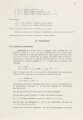
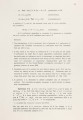
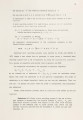
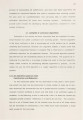
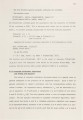
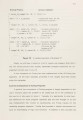
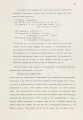
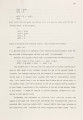
Show 36 Narrowing sequences and T -instantiation sequences are two special cases of TN-derivation sequences, respectively, as shown below: Ao ->>[u k ""1 A,~>>·· · ->>[u k "" 1 An 0' 0' 1 0 n -1 ' n -1 ' 1 n -1 (Narrowing) 8o - > >[t 1 81 ........ > > ··· ...... > >[t 1 8n 0 n-1 {T -instantiation). Algorithm 3. Let R be a confluent term rewriting system. Given two terms A and B to be unified, let C0 = H(A,B). Enumerate all TNderivation sequences Ao ~ > >uu 0 ,k 0 ,-r 0 U 0 1 A, ~ > > ··· ~ > >[[u k -y J t 1 An = H(P n'Qn). n-1' n-1' n-1 ' n-1 If P and Q are unifiable with the minimum unifier JJ, then output the n n Algorithm 3 is same as Algorithm 2, except that it carries out the restricted term construction interleaved with narrowing sequences. The com-pleteness of Algorithm 3 is obvious. Theorem 3-6: Algorithm 3 is complete for all the equational theories that admit a confluent term rewriting system. 0 3.1.4 Remarks We have shown that any term can be systematically constructed, and by using the term construction process, complete E-unification algorithms for all equational theories can be obtained. Algorithm 1 is based on the term con-struction process combined with reduction. Algorithm 2 improves Algorithm 1 by restricting the term construction process and using the narrowing process. Both Algorithm 1 and Algorithm 2 perform term construction before using reduction or narrowing. In Algorithm 3, the term-construction process is inter-leaved with the narrowing process. It becomes clear that such an algorithm may be practically useful if it performs narrowing only (at the risk of losing completeness). We would therefore like to restrict ourselves to equational theories where completeness is guaranteed when the term construction process is entirely ignored. |