| OCR Text |
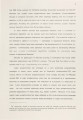
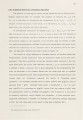
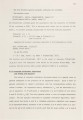
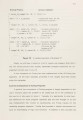
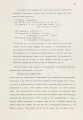
Show 58 The rewrite rules that can create an infinite number of subterms which are equivalent to itself are representative of the second type. For example, consider the following nonterminating term rewriting system: R={ }. h(x) - > h(g(x)) a -> g(a) We can then have a reduction sequence like h(a) - > c,. h(g(a)) - > c,. h(g(g(a))) - > ... where all the terms reduced by using the rule h(x) - > h(g(x)) are equivalent be-cause of the presence of the second rule. 4.2 Transformation On Reduction Sequences of Closed Linear Term Rewriting Systems The objective of this section is to prove the following informally described theorem. Consider a closed linear term rewriting system R with the nonrepetition property, and a unifier (! of two terms P and Q. Let H be a function symbol not in the set F of function symbols used in R. For any reduction se-quence (I) r!H(P,Q) = A0 - > A1 - > A2 - > ... - > A = H(R,R), u0 u1 un_1 n there exist a unifier (! , = {x1 <- t 1, ... , xk <- tk}, (!, =E (!, and a reduction se-quence (II) r!'H(P,Q) = A' 0 - > u'o A' 1 - > u·, A' 2 - > ... - > . A' n' = H(R',R'), u n'-1 such that none of the addresses u'i represents a copy of some subterm in the unifier (! ' . We prove this theorem by construction. Specifically, we define a transfer-mation and show how to use this transformation to get (II) from (1). Throughout this section, we will assume that the term rewriting systems under considera-tion are nonrepetitive. |