| OCR Text |
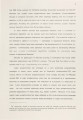
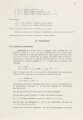
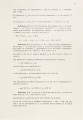
Show such that 2. v'lv = (v,iei )Jv 3. Ylj(C) = Bi where e0 = 0 and ei+l = ,'J iei. Conversely, for each - >-derivation (ii) and every 11 such that en ~ Ev' [V], we can associate a - >-derivation (i). 0 67 It is obvious that if v1 is normalized then U(v1) = 0 and it is not possible for any ui to be a residue of an address in U(v,). Although the condition of normalization is dropped, since none of ui's in the reduction sequence is a residue of some address in U(v,), it is easy to see that for any reduction Bi- > u.Bi+l' ui e I O(C), and thus there exists a corresponding narrowing Ci- > u.ci+l ' Given this I important distinction, we have adopted the proof in [51] as the basis with some necessary modifications to make it work for our case. Also, we have corrected some errors in the proof appeared in [51], and provided quite a few details missing there. Proof: < = part is exactly same as the one in [51]. = > part: Induction on i. For i = 0, it is obvious, taking v1 0 = ., and V 0 V u D(v,). Let us assume 1 to 3 hold for i. From B. ->[ k 1 B.+1 we have I Uj, j I :=lcr cr(ak) = B/Ui I where ak. has been renamed so that D(cr) n Vi = 0. Since "~li(Ci) B. and I I ui is not a residue of any address in U(vJ), we have ui e O(C). This leads to .,.,.(C./u .) = B./u. = cr(ak ). I I I I I · I Let p = .,.,i u cr, we have p(C/ui) = p(ak) and thus I ci - >[ui,ki,(Ji] ci+1' where P· is the minimum unifier of C./u. and ak. The fact that P· ~ p I I I . I I implies that there exists a .,.,, such that p = .,.,'p .. From D(cr) n v. = 0, we I I |