| OCR Text |
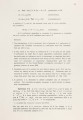
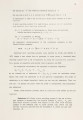
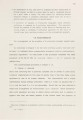
Show lemma 4-21: Let r1 = {x0 < -t0 , ... ,xn < -tn} be a unifier for the terms A and B. For any other unifier r1' = {x0 <-t0, ... ,xi<-t' 1 , •• • ,xn <-tn}' if r1' is such that t - > 1 k . 1 t' ., then r1 ~E r1'. 0 I U, o~ :l I Proof: From t, - > u , k,1:~ t' i, we have 1:~ti - >ru.kl t ',. From 1:1(1 E r1 ', we have r1 s Er1 '. 0 75 This observation suggests a computation strategy to avoid producing redundant unifiers during the course of narrowing. Let r1 = .ul:~n _ 1 1:~n_ 2 ... 1:.~ 0 be the unifier produced by the fol lowing narrowing sequence A 0 - > [u . 8 - > A - > ... - > . A = H(P I Q ), 0,k 0,,:~ 0 J 1 [u 1,k1,1:. 1J 2 [un_ 1 .kn_ 1 , 1:~n_ 1 l n n n where .u = {x0 <- t 0 , .. . , x <- t } is the minimum unifier of P and Q . It is m m n n easy to show that ti is an instantiated subterm in An. Narrowing on theses subterms produces subsumed unifiers, thus should be ignored. 4.5 Summary We have proved that the narrowing method yields a complete E-unification algorithm for the class of theories that admit a closed linear term rewriting system with the nonrepetition property. The proof was based on a transformation: the reduction sequences of closed linear term rewriting sys-terns with the nonrepetition property can be systematically transformed to other reduction sequences with the properties that enable the proof. We have dis-cussed possible optimizations that can be used to improve the basic algorithm. The result of this extension is not only a contribution to the field of E-unification, but also serves as a basis for several applications. The first application is in theorem proving itself. The result obtained in this chapter provides the theoretical basis for a special purpose equality theorem prover, in which equational theories are expressed as typical equational or functional programs. This theorem prover is efficient and goal oriented. |