| OCR Text |
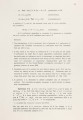
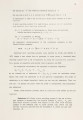
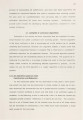
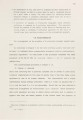
Show Proof: By induction on the number of addresses in N, using Lemma 4-10. D 4. 1.3 The Non repetition Property The nonrepetition property is defined as follows : Definition 4-12: Let R be a term rewriting system. Let M = {u 0, ... ,un, ... } represent the following possibly nonterminating reduction sequence Ao ->[u 0 ,k 0 J A, ->[u 1 ,k 1 J A2 -> ... ->[u k JAn -> .... n- 1' n-1 Two addresses u. and u. in M are said to be in the same equivalence I J class iff the following two conditions hold (a) k. = k., i.e., A./u. and A./u . are reduced by the same rewrite rule; I J I I J J (b) A./u. =E A./u .. I I J J R is nonrepetitive if for any reduction sequence, all such equivalence classes are finite. 0 57 Note that all terminating rewriting systems are nonrepetitive. When there exist reduction sequences that are nonterminating, the number of such equivalence classes will be infinite if R is nonrepetitive. There are two types of rewrite rules that violate the nonrepetition property. The first type is of a "cyclic" nature. The rewrite rule for com-mutativity, for example, is typical of this type, since a term, say f(a,b), can be rewritten an infinite number of times by the same rule f(x,y) - > f(y,x) as fol-lows: f(a,b) - > t:. f(b,a) - > t:. f(a ,b) - > ....... Here M = {t:., !:., ... }, and there is only one infinite equivalence class in the sense of Definition 4-12; thus {f(x,y)- >f(y,x)} is a term rewriting system that does not possess the nonrepetition property. Fortunately, unification algorithms for the commutativity axiom, often along with some other important axioms, have been invented [92, 113], and by using the incremental construction method [55], we can still obtain complete unification algorithms for the theories that include the commutativity axiom. |