| OCR Text |
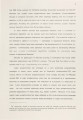
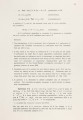
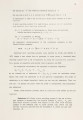
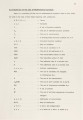
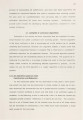
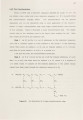
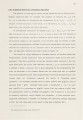
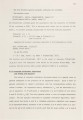
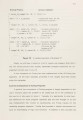
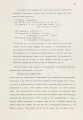
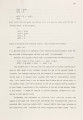
Show 1:~ 1 = {x <- f(g (a,z), g(a,z)), y <- a} 1:.2 = {x <- f(g(a,z), f(g(a,z), g(a,z))), y <- a} r)3 = {x <- f(g(a,z), f(g (a,z), f(g(a ,z), g(a,z)))), y <- a} For example, ~:~ 1 (t 1 ) = 1:~ 1 (f(x, g(a,z))) = f(f(g(a ,z), g(a,z)), g(a,z)) 1J 1 (t2) = 1:~ 1 (f{g ( a,z) x)) = f{g( a,z), f(g( a,z }, g( a,z))) and by the associativity law, w e have rJ1 (t 1) = rJ 1 (t2). 15 In the next section we continue to elaborate on various notions used in E-unification and give a formal treatment to th ese notions. 2.2 Preliminaries 2.2.1 Preliminary Definitions Definition 2-1: Given a set of variables V and a graded set F of function symbols, V n F = 0, T(F,V) denotes the free algebra over V. The elements of T(F,V) are called terms (also called f ree terms and first - order terms). Terms may be viewed as labeled trees in the fol lowing way: a term A is a partial function from N*, the set of fin ite sequences of positive integers, to F u V such that its domain D(A) satisfies: (i} A E D(A) (ii) u E D(t) = > i.u e. D(f(t1 , ... ,ti, ... ,tn)} Vi 1 ~ i ~ n. D(A) is called a set of occurrences of A, O(A) denotes the nonvariable subset of D(A). The set of occurrences is partially ordered: u ~ v iff 3w u.w = v u < v iff u ~ v & u ~ v. V(A) denotes the set of variables that occur in A, A/ u the subterm of A at occurrence u, and A[u <- A'] the term obtained by substituting A/u by A' in A. We use the words occurrence and address interchangeably. We say that a term is ground if it does not involve variables. If u < v we then say that u is outer to v and v is inner to u. We say that two addresses v1 and v2 are independent, denoted by v 1 < >v2, iff v 1 ~ v 2 & v 2~v 1 . Let M and N be sets of addresses. We say M is independent iff Vv,uEM |