| OCR Text |
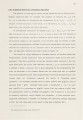
Show 47 study some useful properties. We then introduce a transformation and show how to use this transformation to get new reduction sequences with desired properties. Based on these properties, we prove that the narrowing method yields a complete unification algorithm for the extended domam. We close this chapter with a discussion on further possible optimizations and a few remarks. 4.1 Closed Linear Term Rewriting Systems In this section, we define the class of closed linear term rewriting systems and discuss some useful properties. 4.1.1 The Residue Map and Closed Linear Term Rewriting Systems Let us first review some notation. Recall that subterms are represented by addresses. In the term f(g(a, f(b))), for instance, the address t. represents the term itself and the address 1.2 represents the subterm f(b). A term is a partial function from addresses to function symbols. For example, f(g(a,f(b))( 1.2) gives the function symbol f. V(T) denotes the set of variables that occur in T. D(A) denotes all the addresses in A, O(A) the nonvariable subset of D(A), and U(A) the subset of addresses that represent reducible subterms. For notational convenience, we represent a reduction sequence A0 - > A1 - > A2 - > ... - > A u0 u1 un-l n by an ordered set of addresses M = {u 0, ... ,un_ 1} when no confusion arises. Notice that when M is independent, the order of reductions is no longer impor-tant, hence we can use set operators. For example, we use u to denote the set union when the order is unimportant, and concatenation otherwise. We now define the class of closed linear term rewriting systems, and present some useful lemmas. Our definitions are similar to those in [86], but are tailored to the needs of this thesis. Definition 4-1: A term rewriting system R is I i near iff for each rewrite rule in R, no variable can occur more than once in the lefthand side. D |