| OCR Text |
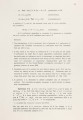
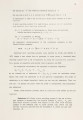
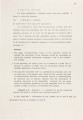
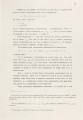
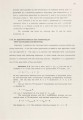
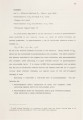
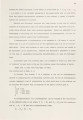
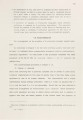
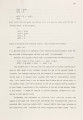
Show We denote by - > * t he reflexive, transitive closure of - > . We say t hat a term A is in normal form iff tl B such that A - > B. A substit ution is said to be normalized if every term wherein is in normal form. A term rewriting system R is said to be a complete set of reductions or a canonical term rewriting system iff: (i) - > * is noetherian or t ermin atin g, i.e., there does not exist any infinite derivation sequence A0 - > A1 - > .... (ii) - > * is confluent, i.e., VA,B,C {A - > * B & A - > * C) = > (=ID B - > ,. D & C - > D). An equivalent characterization of the conflu en ce property is the Church-Rosser property: VA,B A =E B => 3o A -> * 0 & B -> * D. 0 19 Canonical term rewriting systems were defined by Knuth and Bendix in [67], where it was shown how to generate, in some cases, a canonical term rewriting system from a set of equations by using the superposition procedure. For a review on equations and rewrite rules in general, see [50]. For notational convenience, we represent a reduction sequence A0 - > A1 - > A2 - > ... - > A u0 u1 un-l n by an ordered set of addresses M = {u 0, ... ,un- l} when no confusion arises. Notice that when the addresses in M are pairwise independent, the order of reductions is no longer important, hence we can use set operators. Thus, we will use u to denote set union when the order is unimportant, and concatena-tion otherwise. Finally, some function symbols serve as constructors and others as defi ned functions. Definition 2-7: Given a term rewriting system R, the set of function symbols is divided into two disjoint subsets F d and F c· F d contains those function symbols that appear as the outer-most function symbol in the lefthand side of some rewrite rule, which we call defined functions, and the rest are included in F which w e call con- e structors. 0 |