| OCR Text |
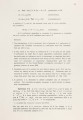
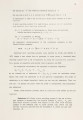
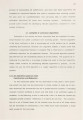
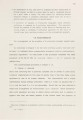
Show By part 2 of Theorem 4-16 we get (v1n9 nlV) = (cr'lv). Therefore (~fJ 9 niV) = ("1n9 nlV) = (cr' IV). That is, fJ9 n ::;;E cr' [V]. From cr =E cr ' we get fJ9 n ::;;E cr [V]. This completes the proof. 0 70 We have thus proved that the statement of Theorem 2-9 holds when the equational theory E admits a closed linear term rewriting system with the non-repetition property and the condition that fJn-lpn_2 ... fJo is normalized is dropped. This is described in the following theorem. Theorem 4-19: Let E be the equational theory defined by a canonical term rewriting system R. Let P and 0 be two terms, C be H(P,O) where H is a new function symbol not in F, and V be a finite set of variables containing V(C). Let ~ be the set of all substitutions cr such that cr is in ~ iff there exists a ->-derivation: C = Co ...... >[uo,ko,fJol c, ...... > ... ...... >[un- l'kn-l'Pn-11 Cn = H(P n'Qn) SUCh that P n and On are unifiable, cr=fJpn -lfJn_2 ... Po, where U is the minimum unifier of P n and On. Then ~ is a complete set of E-unifiers of P and 0 away from V. 0 4.4 Optimization In some situations we do not need to enumerate every narrowing se-quence in order to obtain a complete set of unifiers. In th is section we give two optimizations which can eliminate some redundant computations that lead to no useful unifiers. The first optimization deals with a special kind of narrow-ing, which we call outer narrowing. Outer narrowing can sometimes eliminate redundant narrowing sequences, while the second optimization can avoid producing some duplicate unifiers. |