| OCR Text |
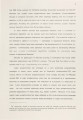
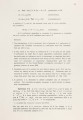
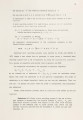
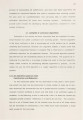
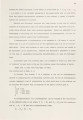
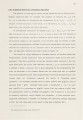
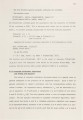
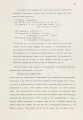
Show 22 plete E-unification algorithm for the equational theories that admit a canonical term rewriting system. Presented below is Hullot's version of the algorithm. Theorem 2-9: (Hullot 80) Let E be the equational theory defined by a canonical term rewriting system R. Let P and 0 be two terms, C be H(P,Q) where H is a new function symbol not in F, and W be a finite set of variables containing V(C). Let ~ be the set of all substitutions such that rr is in ~ iff there exists a ...... >-derivation : C = C ...... > C ...... > ......... > C = H(P ,Q ) 0 [u 0,k 0-~:~ 0] 1 [un_ 1,kn_ 1,j:.n_1 I n n n such that P n and On are unifiable, with the minimum unifier u, i0n_ 1l:.n _2 ••• 1:.0 is normalized, and rr = ,u1[)n-lPn_2 ... Po· Then ~ is a complete set of E-unifiers for P and Q away from W. 0 An E-unification algorithm follows from the construction of Theorem 2-9: enumerate all elements of ~ . 2.4 Relation Between Reduction and Narrowing The relation between reduction and narrowing has been clearly demonstrated by Hullot in [51]. As an example, let us consider the following term rewriting system: R = {g(a) - > f{a,g(a))}. Narrowing on the term g(x) yields g(x) ...... > f{a,g(a)) with a narrowing substitution .,, = {x <- a}. It is obvious that g(x) is not reducible. Applying the substitution .,, to g(x), however, yields .,,g(x) = g(a) - > f(a,g(a)). The relationship between reduction and narrowing was formally es-tablished by Hullot [51], as described below. Theorem 2-10: (Hullot 80) Let A and 8 be any two terms and H be a function symbol not in F. Let C = H(A,B). Let also W be a finite set of variables containing V(C), and v1 be any normalized unifier for A and B. For any reduction sequence issuing from .,,(C): (i) v1(C) = 80 ->[ k I 81 -> ... ->[ k I 8 = H(R,R), uo~ 0 un-1 1 n-1 n there exists a narrowing sequence issuing from C: (ii) C = Co ...., >ru k fJ 1 c, - > ... ...., >ru k fJ 1 Cn = H(P ,Q ), o~ o~ 0 n -1 I n -1 I n -1 n n |