| OCR Text |
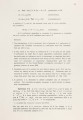
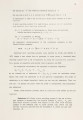
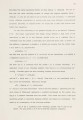
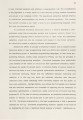
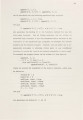
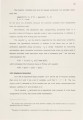
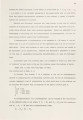
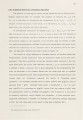
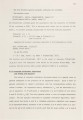
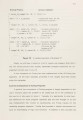
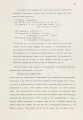
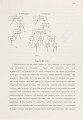
Show D I a I f(a) ROOT I I \ I f(y,) I \ I f(f(a)) 28 \ x, \ \ It is obvious that a t-tree that contains all linear terms is infinite in the general case and finite only for the case where all functions are 0-ary functions, i.e., constant functions. However, given a linear term, a finite tree can be con-structed such that one of the leaf nodes represents the term, up to variable renaming. Given a linear term, all nonlinear terms with the same structure as the given term can be finitely enumerated using the variables that occur in the term.* For example, the set of all nonlinear terms (up to variable renaming) that have the same structure as f{x 1,f{x2,x3 )) may contain f(x 1 ,f(x 1 ,x2 )) f(x 1 ,f(x2 ,x 1)) f(x 1 ,f(x2 ,x 2 )) f(x 1 ,f(x1 ,x 1 )) . Notice that variable namings are not important, but that variable occurrences are. For example, the term f(x2,f(x2,x3)) is redundant with respect to the first term above. Since the purpose of the construction of terms is to enumerate all possible substitutions, and a substitution, say {x1 < -t1, ... ,xn < -tn}, can be viewed as a term H (t 1, ... ,t ), where H is a new function symbol not in F, we will con- n n n sider enumeration of all nonlinear terms when describing the algorithms. * Though the exact number of this enumeration can be calculated based on the number of vari-ables appearing in the term, it is enough to know that it is a finite enumeration. |