| OCR Text |
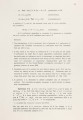
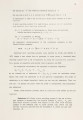
Show such t hat P and Q are unifiable with the mm1mum unifier JJ, and u = n n JJfJn_ 1,on_2 ... 1:.-0 is an E-unifier for A and B, and u ~ E v1 [W]. Conve rsely, for each unifier u generated by a narrowing sequence (ii), t here is a reduction sequence (i) issuing from u(C). 0 23 Note t hat the unifier 11 is required to be normalized. From this theorem, it is not diffi cult to see why the Fay-Hullot algorithm is complete for t heories t hat admit a can onical term rewriting system. By the confluence and termination properti es, for any unifier v/, there is a normalized unifier v1 such that v/=Ev,. The confluence property aga in guarantees the existence of a red uction sequence of the form (i). Since v1 is normalized, none of the re ductions in part (i) occurs on a subterm that is a copy of some t erm in the unif ier "'· Thus there exists a cor-responding narrowing sequence w hich yields a unifier more general t han v,. Th is establishes the completeness of the narrowing technique. For every substitu-tion produced by a narrowing sequence, there is a correspond ing reduction se-quence, from which we can show that the substitution is indeed a unifier for the two given t erms. When considering term rewriting systems that are not noetherian, the condition requiring unifiers to be normalized needs to be dropped because not all terms can be normalized. This can lead to cases where Bi can reduce to Bi+l at ui but Ci cannot narrow to Ci+l at ui, because ui may represent a subterm that is brought in by the substitution "'· Consider again the term rewriting sys-tern: R = {g(a) - > f(a, g(a))}. Let C = f(x,a) and .,, = {x <- g(a)}. Note that .,, is not normalized. Obviously, al-though we have a reduction as follows: v1(C) = f(g(a),a) - > 1 f(f(a,g(a)),a), C = f(x,a) is not even narrowable. Notice that the address 1 (representing the subterm g(a) of f(g(a),a)) represents a copy of a term i ntroduced by the unif ier. This would not occur if Yl were normalized. |