| OCR Text |
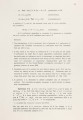
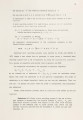
Show 69 mination property, and therefore can be directly used in our case. In order to prove that the narrowing method yields a complete unification algorithm for the theories that admit a closed linear term rewriting system with the nonrepetition property, we need to prove that condition (iii) in Definition 2-5 holds. The fol-lowing lemma establishes this fact. Lemma 4-18: Let R be a closed linear term rewriting system with the nonrepetition property. Let P and Q be two terms that are Eunifiable, and let V be a finite set of variables containing V(P) u V(Q). For any E-unifier ~ of P and Q there exists a ->-derivation : H(P,Q) = C0 - >[ k l C1 - > ... - >[ k . l C = H(P ,Q ) u o· o·fJ 0 u n - 1' n -1 dJ n -1 n n n such that P n and Qn are unifiable with the minimum unifier JJ and the following holds: ~.&8 n :::;E ~ [V] The proof of this lemma resembles the one in [51], but there are impor-tant distinctions. Proof: By the Church-Rosser property, which is equivalent to the confluent property, ~(P) =E ~(Q) implies that there exists a term R such that ~(H(P, Q)) = H(~(P).~(Q)) - > N H(R,R). By Theorem 4-15, there exists a reduction sequence ~ ' (H(P,Q)) - > N' H(R',R') where none of addresses in N' is a residue of any address in U(~ '). Thus Theorem 4-16 is applicable and there exists a ->-derivation and a unifier r1n such that Let JJ be the minimum unifier of P and Q . We have n n |