| OCR Text |
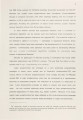
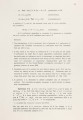
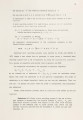
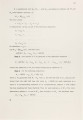
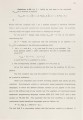
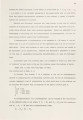
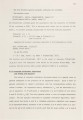
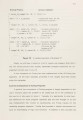
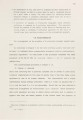
Show Definition 4-2: The quotient u-v of two addresses u and v is defined as: Vu,v,weN ·'' u-v = w iff v.w = u. 0 For example, (1 .3.2.1)- (1.3) = (2.1). 48 When a term A is rewritten to yield a term 8, some of the subterms in A might reappear (perhaps more than once) in B. Typically, the arrangement of these reappearance in 8 will be different from the original arrangement in A. The residue map defined below is intended to capture this rearrangement process by mapping each address v in a term A to a set of addresses in B which are copies of v under the rearrangement. Definition 4-3: Let P(S) denote the power set of the set S. The residue map with respect to a linear term rewriting system R is a function and is defined as: r[A ->[u,k] B]v = {u.w.(v-v') I ak(v')eV(R) & ak(v ')=~k(w) & v'~v} = {v} = 0 r[A- >A]v = {v} = 0 if v>u and v'ED(A) if u < >v and v'ED(A) otherwise if veD(A) otherwise We say that an address w is a residue of v with respect to a reduction A - >[u,k] 8 iff w e r[A - >[u,k] B]v. 0 Notice that an outer address cannot have any residues if the reduction takes place at some inner address. Note also that the positions of the variables in a rewrite rule indicate the result of this rearrangement process. Given that we are using the rewrite rule ak - > ~k in rewriting A - >[u,kl 8, the clause ak(v') 'E V(R) identifies the addresses v' of variables in the lefthand side of the rewrite rule that correspond to subterms in A, the clause ak{v') = ~k(w) indicates the actual reappearance(s) of the variable ak(v') at (local) address w in ~k' and u.w(v-v') then yields the global address(es) in 8 of the copies of v. The |