| OCR Text |
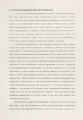
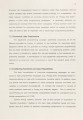
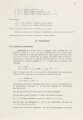
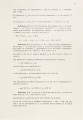
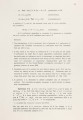
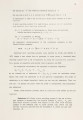
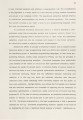
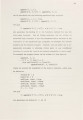
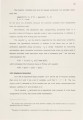
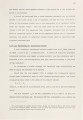
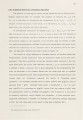
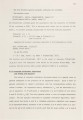
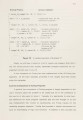
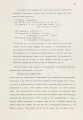
Show The composition of substitutions tr and e is defined a a mappmg: (tr8)x = tr(8x). We denote by trlw the restriction of the substitution tr to the subset W of V. We say that tr is more general than e, denoted tr ~ 8 iff ::1v1 v1 t1 = 8 0 Definition 2-3: Let T(F,V) denote the free algebra over V. A binary relation - on T(F,V) is an equivalence relation if - is reflexive, symmetric, and transitive. An equivalence relation -- on elements of T(F,V) is called a congruence relation if and only if: Definition 2-4: An equation A = B is a pair of terms separated by the symbol =. An equational theory is a set E of equations. We define the notion of E-equality =E generated by E as the finest congruence containing all pairs trA = trB for A = B in E and tr in S. We refer to the set of axioms defining =E as the classical theory of equality. The notion of E-equality is extended to substitutions as follows: t1 =e e iff VxEV trX =E ex. We will write, for a subset W of V: tr =E 8 [W] iff Vx~W trX =E ex. In the same way, tr is more general than 8 in E over W: tr ~E 8 [W] iff 3r/ YJtr = E 8 [W]. The equivalence = relation induced by E on the set of substitutions is defined as follows: tr ::E 8 [W] iff tr ~ E 8 [W] & e ~E tr [W]. 0 Definition 2-5: Two terms A and Bare said to be £-unifiable iff there exists a tr in S, such that trA =E trB. We denote by UE(A,B) the set of all E-unifiers for A and B. Let W be a finite set of variables containing V = V(A) u V(B). We say that a set of substitutions ~ is a complete set of unifiers of A and B away from W iff: 17 |