| OCR Text |
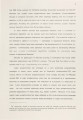
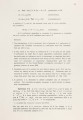
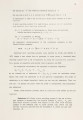
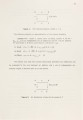
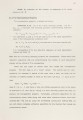
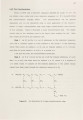
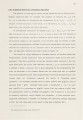
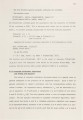
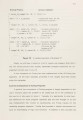
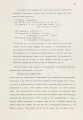
Show 56 Note t hat the definition is similar to the one for the residue map, except that all the outer addresses of u remain as images. The image map can be extended in exactly the same way as in Definition 4-4. We use the notation m[A0, M]N to denote the set of images of a set N with respect to the reduction sequence denoted by the set of addresses M. The image map has properties similar to those of the residue map. The one that we explicitly mention here, which is different from the corresponding properties of the residue map, is that all the subterms represented by an ad-dress and its images are equivalent. Note that they may not necessarily be identical, in contra st to part (a) of Lemma 4-5. Proof: By definition. 0 Lemma 4-7 can be restated based on the above definition. The proof is similar to the one for Lemma 4-7. Lemma 4-10: Given a closed term rewriting system, let M be an independent set of addresses and v be an address. For any terms A, B and C such that A-> vB and A-> MC, we have ::1D B -> ~[A.{v} ]M D & C -> ~[A,M]{v} D. 0 Note that if there exists an address u in M such that u=v, we then have m[A,{v}]M = M - {v} m[A,M]{v} = 0. Both cases are covered by the lemma in a uniform manner by using the image map. The following lemma further generalizes Lemma 4-10. Lemma 4-11: Let M and N be two independent sets of addresses. M and N may not be mutually independent. For any terms A, B and C such that A- > MB and A-> NC, we have ::1D B ->~A.MJN & c -> ~lA.NlM o. o |