| OCR Text |
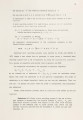
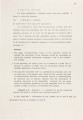
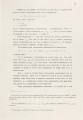
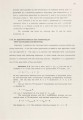
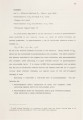
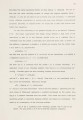
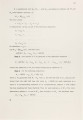
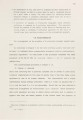
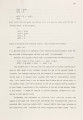
Show Definition 4- 13: Let 8 = {x1 <- t 1, ... , xm <- tm}. We denote by uk an indexed address t hat represents the subterm tk/ u. We define a function i which eliminates the index as follows :~ I ndex(9) is defined to be the set of all indexed addresses in 8 We define the addresses in D(9H(P,Q)) that are introduced by the substitution 9 on H(P,O) as follows: 9(uk) = {v.u I H(P,O)(v) = xk & u = i(uk) & uk e I ndex(8)} U(9) = { U I U e D(9) & u e U(9(H(P,Q)))}. 0 60 Notice that 8(uk), D(8) and U(9) are all dependent on the given term H(P,Q). U(8) is the subset of D(8) in which every address represents a reduc ible subterm in 8(H(P,O)). In the following exploration, we are only interested in U(8) and of ten refer to U(9) rather than to D(9), since reductions can only occur at the reducible addresses. For the previous example, we have lndex (8) ={A 1, A2, 12} 8(A 1) = { 1. 1. 1} 9(A 2) = { 1.2, 2.2} 8(12) = {1 .2.1 , 2.2.1} D(8) = 8(A 1) u 9(A 2) u 9( 12) = {1.1 .1, 1.2, 1.2.1, 2.2, 2.2.1}. Given a term H(R,R) and an address w = i.u in D(H(R,R)), we sometimes need to refer to the "symmetric" address w' = j.u where if i= 1 then j=2 and if i=2 then j= 1. For this purpose, we give the following definition. * Definition 4-14: We say that the addresses w and w ' in D(A) are complementary, denoted by w-w', iff 3u (w = 1.u => w' = 2.u) & (w = 2.u => w' = 1.u). 0 The need for this funct ion is based on the f act that all other definitions concerning term rewriting systems deal with addresses with out index. |