| OCR Text |
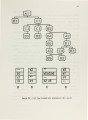
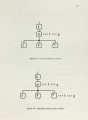
Show 116 into more subtrees to accommodate an arbitrary program structure. The concept of clamping is proposed to compress linear program graphs into a single node to reduce the storage requirement and enhance the efficiency of stamping. 4.1 Future load balancing research In a sense, the gradient model is a divide-and-conquer approach to solve the seemingly complicated load balancing problem. The problem is divided into two levels. An individual processor has to decide its own loading condition an~ the network determines when and how to balance them. The gradient model seems to provide a clear answer for the network level. Although a framework for measuring internal pressure of a processor to determine its loading condition has been defined, a more accurate and efficient load measurement method is still being sought. It is fair to assess that the gradient model transforms a multiprocessor load balancing problem to a single processor load measurement problem. Within the gradient model framework, several approaches toward a better load measurement are possible. First, internal thresholds, both high mark and low mark, can be varied dynamically. The difference between the high and low mark may be adjusted to reflect the relative effectiveness between a processor and the communication network. To stimulate faster load spread, it i~ intuitively beneficial to set thresholds at low value when the progr~m executes at its initialization stage. This study assumes the domain of applicative systems. The packaging of tasks and the communication behavior between tasks are modelled after a typical applicative system. However, the proposed mechanisms do not seem to be confined to the applicative domain. It is quite possible that the same gradient model can be applied to other large-scale multiprocessor systems designed with nonfunctional programming languages. This may involve devising a network operating system which is similar to applicative systems. |