| OCR Text |
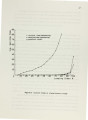
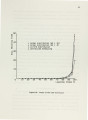
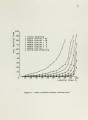
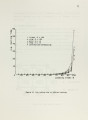
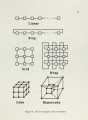
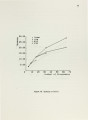
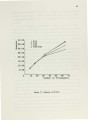
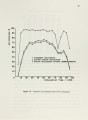
Show 44 PP(i) 2 min { g(i), min { c . . + PP(j) over j, where d .. = 1 } } I,J I,J i.e., PP(i) = min { g(i), c .. + PP(j) over j, where d .. 2 1 } } I,J l,j where c. . is the communication cost between node i and j. Compared with I,J definition 2.4. 1, it is obvious that the homogeneous communication is a special case where c . . = 1 for all i and j. I,J 2.5 Simulation The gradient model load distribution mechanism was first simulated with a SIMULA program running on DEC-20. The main objective of this simulation was to quantify the effectiveness of the gradient model versus the centralized. shared-memory load dispatching model in a multiprocessor system. Simulation of a network balancing mechanism such as the gradient model is not meaningful unless program behavior is carefully modelled. In this simulation. random tasks are artificially injected into the system. · Tasks are as-signed to the processors based on a controlled mapping distribution. The per-formance of the system is measured by the average waiting time of these tasks. Since the purpose of load balancing is to increase system performance via spreading tasks among available processors, it is reasonable to assume that the effectiveness of the load balancing algorithm is inversely proportional to the average waiting time of all tasks. Definition 2-8: The throughput of a system is defined as the · recipr'ocal of the average waiting time of all user tasks. A job's turnaround time equals the processing time of the job plus the waiting time. An ideal load balancing algorithm should provide infinite throughput, i.e., zero waiting time, for an underloaded system.- A system is underloaded if the time required to process all tasks does not exceed the total processing power of the system. In reality, it is expected that average waiting time extends as the system |