| OCR Text |
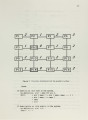
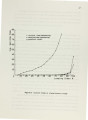
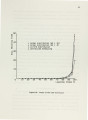
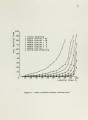
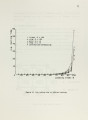
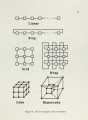
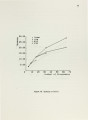
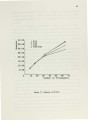
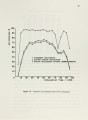
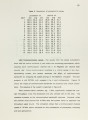
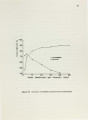
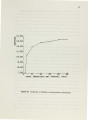
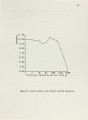
Show 50 The gradient model without any pressure updating activity, i.e., update takes infinite time, is equivalent to the no-balancing case. Therefore, it can be expected that the system performance will deteriorate when the updating period is prolonged. Figure 1 1 collects the results of various propagated pressure updating periods. It shows that a high performance system requires frequent gradient updating. The figure also reinforces the claim that the centralized balancing scheme and no-balancing scheme are special cases of the gradient model. 2.5.4.3 l"'pact of system topology. A grid system may be wrapped around. This means that P1j is connected to Pmj and Pi 1 is connected to Pin for all i and j in an m by n system. Intuitively, a wraparound system will balance the work load better than a regular grid · system because the traveling distance for pressure updating packets is shorter. The simulation uses sixteen processors for comparison. These are alternately configured as a 4 x 4 wraparound machine, a 4 x 4 grid machine, a 16 x 1 ring machine and a 16 x 1 list machine. A list machine is essentially a ring machine without wraparound. Data in a list machine are passed from node to node sequentially. Results in Figure 12 show that the gradient model performs equally well against the centralized scheme on all configurations. It is also noted · that, under heavy loading conditions, the wraparound configurations works better than the non-wrap topologies. 2.6 An implementation One difficulty encountered in the simulation study just described is how to model the behavior of a functional program. The dynamic nature of functional programs seems to preclude the applicability of using a conventional task arrival pattern, such as Poisson distribution. Furthermore, the rate of task regenerations are likely to be different as simulation progresses. The available simulation environment does not support such variations easily. In order to study the |