| OCR Text |
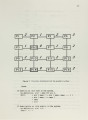
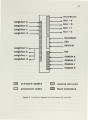
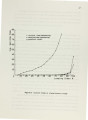
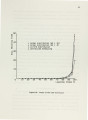
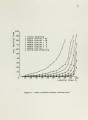
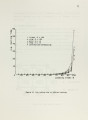
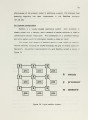
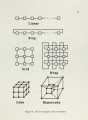
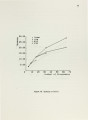
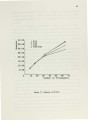
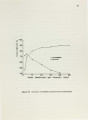
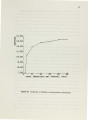
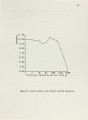
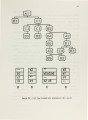
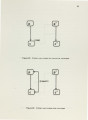
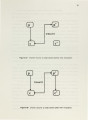
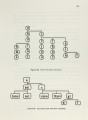
Show fel(); { result print:dc[1 ,51 2] dc[m,n] =- } { result if m >= n then m else dc[m,med]+dc[med+ 1 ,n] med = (m+n) div 2 } 58 2.6.3.3 TopoiQgy._ The program DC512 is run on the Rediflow simulator with an increasing number of xputers. Given a fixed number of xputers, DC512 is exercised on several configurations. Different topologies used in the simula-tion are depicted in Figure 15. The speedup of the simulation versus the size and topology of the system is shown in Figure 16. It is no surprise that wrapped topology performs better than the non-wrapped configuration, since the average distance between any two xputers is only about half in the wrapped configuration. Both the tasl< packets and status functions benefit from the shorter communication distance. The simulation shows that the speedup increases almost linearly as the number of xput,ers increases through 16 processors. The system efficiency declines sharply as the system size exceeds 32 xputers. Closely examining the simulation shows that the algorithm DC512 does not have enough concurrent tasks to l<eep large numbers of xputers busy. The result in Figure 16 reflects the simple fact that merely adding processors is a pure waste if there is no concurrency in a program. 2.6.3.4 Program size. In order to show the scalability beyond 16 xputers, we increase the size of the DC512 program to DC 1024. Figure 17 summarizes the speedup of the new program. with simple cube and hypercube configuration added. Note that the .system with only 4 xputers can not run through comple-tion because of insufficient storage in the xputer. This otrservation savs that scale-down of a problem is not always possible unless the amount of memory |