| OCR Text |
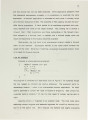
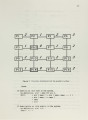
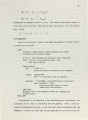
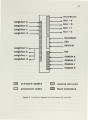
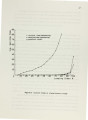
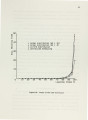
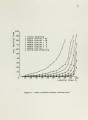
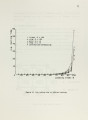
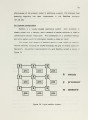
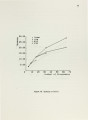
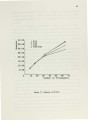
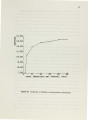
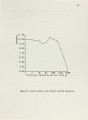
Show 46 ing time of m x n x DT. If k tasks are generated during DT and task i requires Ti processing time, then the loading index of the system is: loadindex = ( T1 + T2 + ... + Tk ) I ( m x n x DT ) 2.5.2 Communication delay Communication delay between processors is simplified in this pilot simulation. In a decentralized multiprocessor system with a centralized load balancing facility, a task is transferred from its generating node to the centralized dispatcher and then sent to a destination node by the dispatcher. A task in the gradient model travels from a node to a neighbor node until an available processor is reached. Depending on where the centralized dispatcher is located and the travel pattern of tasks, communication delay may have positive or negative impact on both schemes. In the centralized case, a task to be moved to its neighbor has to travel from the originating node to the dispatcher and comes back, whereas it only has to make one hop in the gradient model. When more tasks start to compete for fewer idle processors, the centralized scheme. which usually has constant communication delay, is likely to dispatch tasks faster than the gradient model. In the following discussions, communication delay is omitted for simplicity. 2.5.3 Base results The basic simulation is done with the following parameters. simulation time = 3000 propagated . pressure updating period = system configuration = 4 x 4 no wrap-around new task distribution = uniform average task duration = 50 (Poisson distribution) Simulated throughput comparisons among the gradient model, the centralized dispatching model, and the no-balancing case are depicted in Figure 9. The X axis indicates the loading indexes of a 4 x 4 system. The Y axis represents the average waiting time of a task. This simulation uses a uniform distribution for new task generations. The initial task distribution does not have any effect on the system when centralized load balancing control is used. |