| OCR Text |
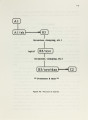
Show 6 generates two other tasks, while the equivalent of a sequential computation can be represented by a task which does some work, spawns another task, then dies. Because tasks in the reduction model do not have a long active lifetime, it is not necessary to set up a collection of register values and load them into a processor (usually called context switching). Since the processor is almost constantly shifting its attention from one task to another, no context is used, thus minimizing that particular cost of spawning work. An advantage inherent in the reduction model is that all synchronization for the above activities is implicit in the underlying functional language implementation. This removes a considerable burden from the programmer. Whenever strict functions are involved (functions which require all of their arguments). the spawning of the necessary activities takes place automatically. This is a strong contrast to process oriented models, in which there are three separate endeavors: setting up processes, synchronizing them, and using their values. 1.2 Desiderata of a multiprocessor system 1.2.1 Scalability A system is scalable. or extensible. if it can be made incrementally more powerful by adding more hardware resources, i.e. one can ''buy speed" [1 O]. Conventional shared-memory multiprocessor systems do not scale well due to memory bandwidth limitations (the so-called "VonNeumann bottleneck" [4]). tn orde~ to achieve high scalability, a multiprocessor system must be able to issue "!"any simultaneous requests. sustain long latencies of these requests, and deal with responses that arnve out of order [3]. 1.2.2 Determinacy The terms determinacy and referential transparency have been used somewhat interchangeably in the literature. Referential transparency describes a property that the value of an expression depends only on its textual context. not |