| OCR Text |
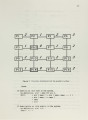
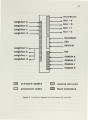
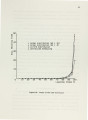
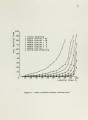
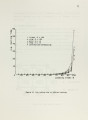
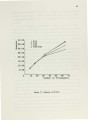
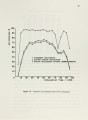
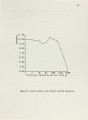
Show 68 2.6.3.8 Propagated pressure updating frequency. The impact of pres-sure updating frequency is revisited in the Rediflow simulations (cf. section 2.5.4.2). Figure 21 shows the speedup of program DC200 running in a 4x4 grid system. Note that the system throughput does not increase when the update period decreases. The reason is that the additional updating packets, which are caused by the short updating period, may interfere with regular data communications. In this example, the system peaks when updating period is about 128. Load balancing becomes less and less effective as the updating period prolongs. 2.7 Summary The load balancing problem of applicative systems is characterized by a large number of processors and spontaneous spawning of numerous concurrent tasks. Consequently, any balancing scheme requiring any global action seems impractical when the system scales up. Spontaneous task generation also makes it difficult to prenegotiate a balanced distribution. In this chapter, an efficient and elegant load balancing scheme, called the gradient model, is devised. The model is based on a demand-driven principle which requires the underutilized processors to dynamically initiate the load balancing requests. A system-wide gradient plane is formed as a result of these requests. The nearest overloaded processor responds to the request by migrating an unevaluated task down the gradient plane toward the underutilized processor. The gradient surface serves as both a load request and load migration pointers. A global balance state is achieved by successive approximation of many localized balances. The concept of saturation is coined to discourage futile load migration when the system is fully utilized. A pilot SIMULA simulator ~as designed to compare the effectiveness of the gradient model w1t.h a conceptual shared memory model. Another simulator. the Rediflow simulator. which simulates a proposed applicative system [35, 36] is enhanced to incorporate the gradient model load balancing |