| OCR Text |
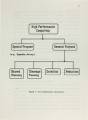
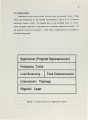
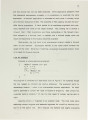
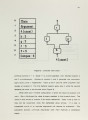
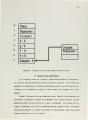
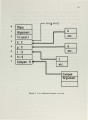
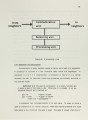
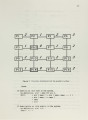
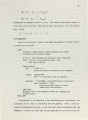
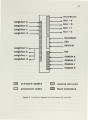
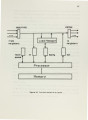
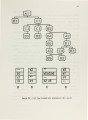
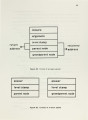
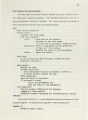
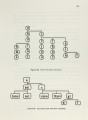
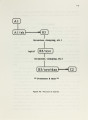
Show 54 A schematic overview of the organization of an Xputer appears in Figure 14. This diagram assumes that propagated pressure updating information is sent through the switching layer along with other types of packets. This assumption is used in the simulator, except for garbage collection. 2.6.2 Rediflow simulator The Rediflow simulator is an attempt to provide more realistic simulation of a multiprocessor environment. The simulator is based on a reduction model of computation and driven by an applicative language, Function Equation Language (FEL) [34], so-named because its expressions are literally equations describing functions and objects. The simulator is written in PASCAL and has about 10,000 lines. The code contains comprehensive statistic collection features and extensive debugging facilities. It has been running on both DEC-20 and VAX machines since 1983. Further detail of the simulator can be found in [37]. 2.6.2.1 Tunable parameters. The simulator permits the specification of various parameters, including the number of xputers, the amount of memory, the configuration of the xputers, the switch capacities, the communication bandwidth, and others. The loading status of an xputer is computed as a function of the backlog of tasks and the amount of memory in use. The internal pressure function is number-of-tasks + memprs * memory-in-use where memprs specifies the amount of pressure exerted by each word of memory being used and may be specified as a simulator parameter. On this simulation study, memprs is set to 0.0 1. An xputer is said to be idle if its internal pressure falls below a settable low threshold, LDLMARK. An xputer is abundant if the internal pressure rises beyond a settable high threshold, LDHMARK. The default setting of LDLMARK is 2 and LDHMARK is 3. The default size of an APPLY packet is 20 bytes. A DATA packet has 10 |