| OCR Text |
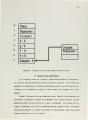
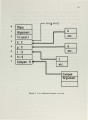
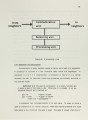
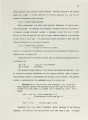
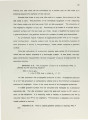
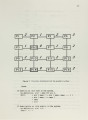
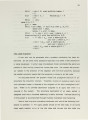
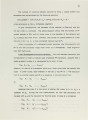
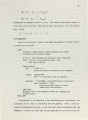
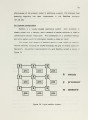
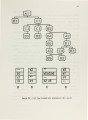
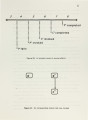
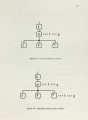
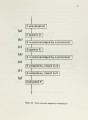
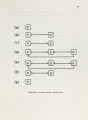
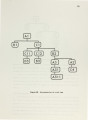
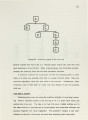
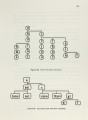
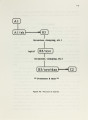
Show 35 The number of updating packets required to bring a stable system into saturation can be calculated by the following equation: num_update • sum_of_all_k { Lk"' Ceiling_of [(wmax-wk) I 2] } where processor pk has Lk immediate neighbors. In grid configurations, the diameter of the network is O(sqrt( n}) and the link per node is a constant. The above equation shows that the number of PP update packets is O(n sqrt( nJ), since wmax is the diameter of the network and wk is always less than wmax. Similarly, the number of update packets of a tree network is O(n log n). A fully connected network has O(n2). When a processor of a saturated system becomes idle, the proximity and PP of the idle processor drops from wmax to 0 immediately. Load migration may start right away. 2.4.4.2 Propagated pressure transition. The shift between saturation and nonsaturation is clearly a special case of general PP transitions. Assume that a stable gradient surface A is represented by an array of sets: where ai is a set of all processors which are i-hops away from the nearest idle node. In other words, each element in the set ai has PP of i. The transition from A to another stable state B is a sequence of transformation from [ao' a,' a2, .... ' awmax] to [bo' b, b2, .... ' bwmax] • Suppose that state B is the result of adding idle nodes to A, i.e., b0 is a superset of a0. During the first tranformation, all new idle processors are merged with a0 and the transition for the first entry of state B is completed. [ao, a,, a2, .... ' awmax] [bo, 1 a , awmax 1 a, ' 2 ' .... , ] [bo, b, 2 a2 ' •••• ' awmax 2 ] |