| OCR Text |
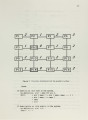
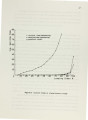
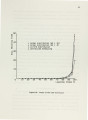
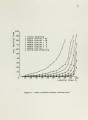
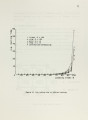
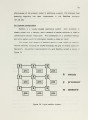
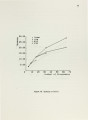
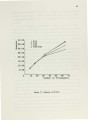
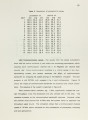
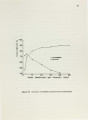
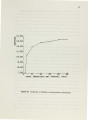
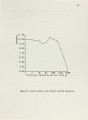
Show 45 load increases. Without considering communication delays, it is also expected that the centralized dispatching scheme will perform better than any distributed load balancing algorithm. By using throughput as an indicator, the simulation described below shows quantitatively that the gradient model mechanism works almost as well as the centralized dispatching scheme. 2.5.1 Assum.Q_!i_9n~ The simulator has m x n processors configured as a rectangular array. Edge processors mav be programmed to form an end-wrap connection if desired. All processors have identical capabilities and every task may be ex-ecuted by every processor. Arrival of new tasks at a node is assumed to be completely random. A Poisson function is used to control the time interval between two consecutive task generations. The mean of the Poisson function is used to adjust simulation load of the system. A smaller mean will increase the rate of new task arrival and hence increase the system load. It is also important to evaluate a load balancing algorithm against various load generation patterns. Intuitively, systems with uniformly generated loads need less balancing effort than those that have all tasks generated from a single node. The simulator provides programmable options to control different initial foad assignments. Available options are uniform and normal distributions with programmable mean and standard deviation. Single-node generation is achieved by programming a very smalr standard deviation. Execution time of a task is regulated by another Poisson function. The length of execution reflects the complexity of a task. The mean of execution time, along with task arrival rate, is used to calculate the loading of the system. Definition 2-9: The loading index of a system is the total execution time required to complete all tasks divided by the total available processing t1me. For a time period DT. an m x n multiprocessor system has total process- |