| OCR Text |
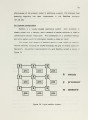
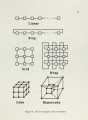
Show 19 network of processors. A fundamental assumption in many dynamic balancing approaches is that the system throughput can be enhanced by merely increasing the overall processor utilizations. Therefore, the basic strategy of a dynamic balancing method is to keep each processor utilized as much as possible. Most dynamic balancing schemes [46, 40, 53] allow only neighboring nodes to engage in load exchange. A load balancing process usually starts with status update. An ideal status should precisely reflect the loading of a processor, be simple to implement, and be generally usable. Besides the static versus dynamic classification, a load balancing method can be viewed as supply-driven or demand-driven. A supply-driven load balancing method attempts to push excessive tasks out of the overloaded processors while a demand-driven approach commands the underutilized processors to request work load from other nodes. The problem with supply-driven methods is the accuracy of prediction, while the problem with demand-driven methods is the efficiency of the mechanism. If the behavior of a multiprocessor system, either hardware or software, is not easily predictable, the supply-driven load balancing approach does not seem very promising. A large class of computer applications, particularly in the artificial intelligence and signal processing areas, are data dependent and thus warrant an efficient demand-driven mechanism. This study focuses on load balancing issues of distributed applicative systems. Applicative systems are intended to gain speed advantage through distribution ~f work load among a number of processors. A program is started by generating a task at one processor. The system exploits concurrent executions embedded in the program by spawning new tasks which can be executed on other idle processors [31, 10, 19, 35]. A spawned task may, in turn, spawn more tasks, requiring further dispersal of the work load. The nature of applicative systems adds a few constraints to the applicability of load balancing strategies. For example, an applicative system has a large number of processors which practically prohibits any global inquiry. The |