| OCR Text |
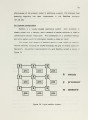
Show 33 neutral. If there is some other idle node in the system, a new gradient surface is reshaped. The apply packet is then redirected to the new nearest idle node. In mathematics terms, the gradient model load balancing scheme is a form of relaxation. The single hop migration of apply packets is a successive approximation method toward a global balancing of a system. If there is enough lapse of time between load fluctuations, the gradient model can achieve optimal task assignment. From another point of view, having a long lapse between load changes is the same as having the extremely fast load update. 2.4.3 Saturation A system is stable when there is no further change in the gradient surface. A stable system does not need any PP adjustment or task transfer. There are two occasions where an applicative system may arrive at this state: ( 1) When there is no change in every processor state; (2) When the system is saturated. Definition 2-7: An applicative system is saturated if none of the processors are idle. In other words, a system is saturated if all proximities are equal ~o wmax. In a saturated system, there is no need to adjust the load distribution because every processor has been well utilized. All load balancing related ac-tivities, e.g., pressure update, are no longer useful. In fact, these activities are counterproductive, since they waste processor resources and may clog the switching network. A saturated system waits for some node to reopen the gate and adjust~ loads accordingly. Note that generation of new tasks during saturation does not disturb the stable state, since it does not change the proximity distribution. When a node finishes processing, it reopens the gate, which changes its proximity to 0. The valiey is then rippled through ttie syste~ until it is stopped by an abundant processor. Such a smk in a stab~e and flat surface creates a disturbance and d~aws some apply tasks from the nearest neighbor. Once the demand is satisfied, the system returns to saturation. |