| OCR Text |
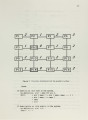
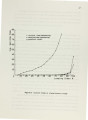
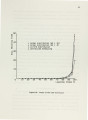
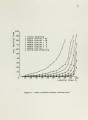
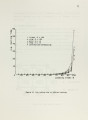
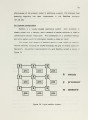
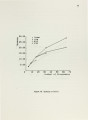
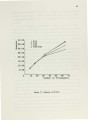
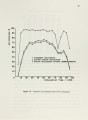
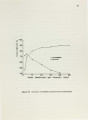
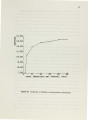
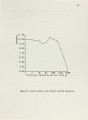
Show 48 The figure indicates that the gradient model shows no significant throughput difference when compared with the centralized dispatching model until load exceeds 65 or 70 per cent. When load grows up to 95 per cent, the average waiting time of tasks is still within 5 per cent of the average task processing time. It highlights the effectiveness of the gradient model. 2.5 . ~ Variations of simulation The primary interest of these simulations is to verity the applicability of the gradient model under various system conditions. The simulator has several programmable parameters to facilitate these experiments. Task generation pattern can be programmed to a normal distribution with any mean value and standard deviation. The pressure updating period may be adjusted to reflect different load balancing channel capacity. ~.5 . 4.1 Impact of new-task distribution. Equally loaded multiprocessor systems may have vastly different load balancing activities because of different new task distributing patterns. Intuitively, a load balancing mechanism has more work to do if all tasks are generated from a single node. On the other hand, a uniform distribution of new tasks may require minimum load readjustment. Figure 10 shows performance differences between these two extremes of task distribution. A node, e.g., {2,2), is chosen as the mean of a normal distribution function. The normal distribution function. along with a standard deviation of .5, gives a bell-shaped new task distribution. Single node generation is simulated by the normal distribution with .01 standard deviation. Results show that the effectiveness of the gradient model is nearly independent of new-task distributions. 2.5.4.2 Impact of pressure updating period. Since communication delay is assumed to be one time unit. in the simulation, a J3eriodic propagated pressure updating activity is enforced to reflect different communication bandwidths. As mentioned earlier. the gradient model with instantaneous pressure updating, i.e.( update takes zero time, is equivalent to the centralized dispatching scheme. |