| OCR Text |
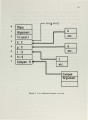
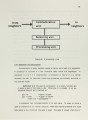
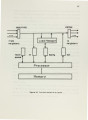
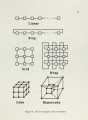
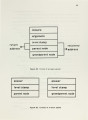
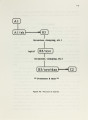
Show 27 by stockpiling of new tasks close it. A node with high pressure can not force load migration unless there exists a demand from another processor. The transfer of tasks from high to low pressure nodes is solely a result of low pressure demand, and has little to do with the accumulation of high load. 2.4 The gradient model Definition 2-1: The distance d between two processors, i and j, of a multiprocessor network is the smallest number of arcs from i to j. Definition 2-2: The diameter of a multiprocessor network N is the maximum distance between any two nodes of N, i.e., diameter (N) := max { d. . for all i, j in N } l,j For example, the diameter of an m x n system is m + n - 2 if there is no wrap-around on edge processors. The diameter of a wrap-around m x n sys-tern is m div 2 + n div 2, where div represents integer division. A node in an applicative system can be divided into three functional blocks: processing elements, communication elements, and balancing elements (see Figure 6). The processing element handles all data manipulation. The communication element is responsible for delivering and receiving tasks or data to and from other processors. The load balancing element collects loading status from its immediate neighbors and determines whether an unprocessed task has to. be transferred. Although these three elements may be implemented with three or more separate machines, it is also possible to integrate all functionalities into a single physical processor. A job is started at one processor by demanding the answers. The proces-sor in turn may demand more intermediate results. When a result is demanded, the processor forms an apply packet to represent the task. A task is either executed by the local processing unit or migrated by the load balancing element to other nodes. |