| OCR Text |
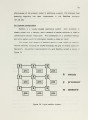
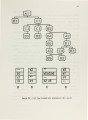
Show 25 the potential is called closeness, or proximity. Later in section 2.4.7.8, the gradient model is enhanced to accommodate heterogeneous systems. 2.3.4 Status function Using the proximity as the potential for building the gradient surface, a load is transferred to a neighbor which is "closer" to an idle node, rather than to a neighbor which is "less busy." Therefore, load is transferred to a nearest idle processor by taking the shortest route. The proximity function allows a system-wide gradient surface to be established. An idle node is represented by a valley on the surface. Multiple idle nodes are well accommodated in this model. Excessive tasl<s are flowing from hills toward valleys. The establishment of a gradient surface also eliminates the need of a "bidding protocol" which appears in most load balancing reports [40, , , 1 46]. The proximity function has multiple attributes. First, it is a network-wide indication of idle processors. Second, it carries an implicit or explicit request for work load. Third, it serves as a minimum distance routing pointer for directir ] unprocessed tasks. The proximity function is a simple concept and easy to implement. It is a unique feature of the gradient model load balancing scheme. The value of the proximity function is, undoubtedly, dependent on the network topology. But, the function itself is independent of system configurations. A configuration-insensitive load balancing algorithm is important when the fault-tolerant requirement is considered. 2.3.5 Saturation control After all processors in a system are busy, there is no need to further balance the toad because processors have been fully utilized. Any load balancing activity during this period can only increase system overhead and reduce throughput. The challenge for a load balancing scheme is to effectively detect |