| OCR Text |
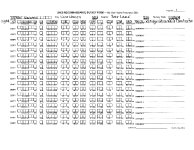
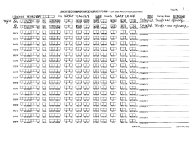
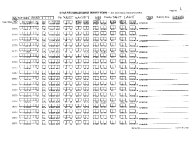
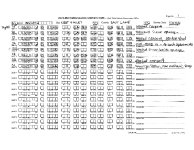
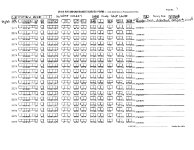
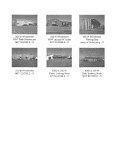
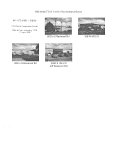
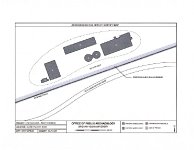
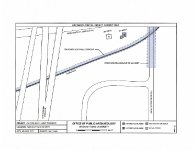
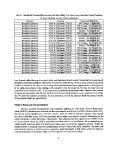
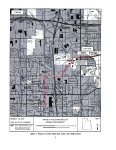
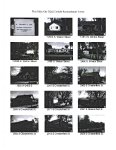
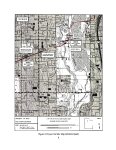
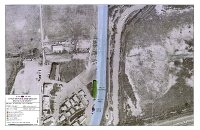
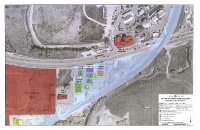
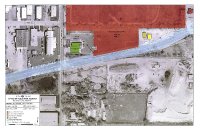
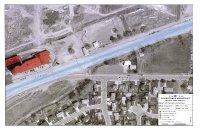
Show The Utah and Salt Lake Canal Company, together with several other water consortiums, constructed an additional pumping station on Utah Lake, and in 1934, the Utah Lake Irrigation Company ceased pumping operations, choosing instead to purchase water shares and distribute the water through a siphoning system, which was constructed in 1947-1948. An additional pumping station was completed in April 1949 as part of the Provo River Project. Additional pumps, combining water from the Provo River, Jordan River and Utah Lake combined to create a complicated water exchange district known as the Welby Jacob exchange (Hom 2004) National Register Assessment: Eligible Property Name: Provo Reservoir CanallMurdock Ditch Site Number: 42SL369/42UT947 Site Type: Irrigation Canal Site Description: Water transported through the Provo Reservoir Canal was made available from three storage reservoirs constructed at the headwaters of the Provo River beginning in 1910, with expansions to the canal beginning in 1915 in order to provide additional irrigation resources. The documented segment stretches in a north-south direction, is located within agricultural fields. It passes underneath a modem Denver and Rio Grande Western railroad bridge at the intersection of 9000 S and Old Bingham Highway in West Jordan, and consists of a 20 meter (65.62 foot) long section of canal. The 3 meter (9.8 foot) wide canal is earth-walled and unlined approaching an intact diversion structure and debris grate. The diversion structure consists of large rocks with concrete poured around them using milled lumber forms to form a concrete and rock wall. Sloping walls line the approach to the debris grate. The walls are about 6.1 meters (20 feet) long by 25 centimeters (to inches) wide. The diversion structure opens into the ditch to the east. The historic debris grate consists of a section of railing with 3.1 centimeter (1.25 inch) metal pipes bolted to the front of the canal, which then tapers into a culvert under the existing Denver and Rio Grande Western Railroad and Old Bingham Highway. Walls in this area of the canal consist of poured-in-place concrete. A second debris grate, directly to the south of the culvert consists of seven lengths of railroad rail laid at an angle over the culvert. The edge of the culvert is only about 1.5 meters (4.9 feet) away from the existing tracks. The feature should be mapped and documented before demolition or replacement. At time of documentation, water was too high for the actual culvert to be seen. Other modem headgates are present on the north side of the road. Site mstory: "The Provo Reservoir Canal was completed in 1910 by the Provo Reservoir Company ... In 1915, water from the canal was siphoned across the Jordan River to two branch canals, known as the Jordan Extension Canal, on its west side in 48-inch diameter concrete and 40-inch diameter steel pipes. Additional water to the canals on the west side of the Jordan River was provided by pumps at the Jordan Narrows beginning in 1921" (Hom 2004:29). The canal was constructed in order to provide irrigation to both Utah and Salt Lake Counties, but by the late 1930s, the canal no longer provided sufficient water to meets its expanding requirements. As a result, the Bureau of Reclamation purchased the canal in 1939. The Bureau enlarged and improved the canal, completing the new construction in 1948 and increasing flow from 200 to 550 cubic feet per second. Later diversions and extensions, during the period of 1947 to 1950, were also known as the Provo 20 |