| OCR Text |
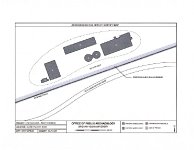
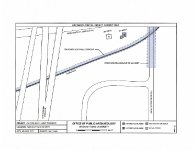
Show which was completed between the coal mines and Springville, Utah in 1879, became part of the Denver and Rio Grande Western on June 14, 1882. An additional spur, which connected the main line to Saline via Thistle and Manti was completed in 1891. Other lines associated with the railway system included a Provo-to-Heber branch line constructed during 1898 to 1899 (today's "Heber Creeper"), and a Eureka to Springville route, completed in 1892" (Atlas of Utah 1981; Carr and Edwards 1989). As the company expanded, most of the rail lines which were consolidated into the system were standard gauge, requiring the conversion of the earlier, narrow gauge, lines into standard rails. This conversion was completed in 1890 (Robertson 1986). "The first decade of the Twentieth Century saw an impressive amount of copper ore extracted from numerous mines in the (Bingham) canyon, all of which was taken by the Denver and Rio Grande Western Railway to smelters in Midvale and Garfield" (Carr and Edwards 1989:74). In order to handle all the ore traffic, in 1905, the company built a short cut line from Welby, on the Bingham branch line, to the smelters. Production still outweighed transportation, however, requiring the company to build an additional, low grade line which swung around the mouth of the canyon into a wide, flat area, and eventually joining up to the Copper Belt Railroad. This additional line allowed the company to greatly increase the amount of ore which could be transported to the down-canyon smelters at Midvale and Garfield (Carr and Edwards 1989). However, even this increased capacity was insufficient to handle all the ore generated by the mines. George (Jay) Gould, the most influential member of the board of the Union Pacific rail conglomerate (which included the Denver and Rio Grande), was reluctant to build any additional canyon track, since the company was focusing on completing the rail lines running between Salt Lake City and Oakland, California. As a result, in 1908 the Utah Copper Company organized the Bingham and Garfield Railway, in order to more effectively haul the ore generated by the mine. The Denver and Rio Grande continued to haul ore for the mines until 1911, when the new railway was completed. Following its completion, the Denver and Rio Grande "delivered coal and materials to the mines and whatever couldn't be brought in over the Bingham and Garfield" (Carr and Edwards 1989:75). Eventually, the mining tracks saw little use, although a small amount of traffic still continues on the branch between Copperton and West Jordan, ''where the Interstate Brick Company and several other modem plants are operated" (Carr and Edwards 1989:75) Today, the Denver and Rio Grande Western is considered to be one of the four major railroad systems within the state of Utah, annually carrying between 15 and 30 million gross tons offreight, mostly coal, from the Marysvale, Tintic and Pleasant Valley mining districts into Salt Lake City and Ogden (Atlas of Utah 1981). National Register Assessment: Eligible Property Name: Union Pacific Railroad (formerly Utah Southern Railroad) Site Number: 42SL344 Site Type: Railroad Site Description: This site consists of a 20 meter (65.62 foot) long segment of the historic Utah Southern RailroadlUnion Pacific Railroad which passes through the Salt Lake Valley from north to south. The linear segment is located at the intersection of 2200 S 150/200 W, a highly urbanized area in South Salt Lake City. No vegetation remains on the site. The documented segment is comprised of modem tracks and ties 10 |