| OCR Text |
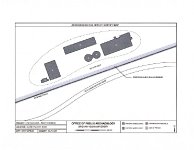
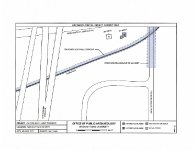
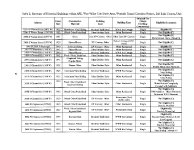
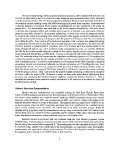
Show Copper Belt Railroad The Copper Belt Railroad Company was incorporated on May 15, 1901 and consisted of 4.27 miles of track carrying copper and mining freight from Bingham. The company was owned by William Bayley, and operated under its own organization until December 31, 1904. "The Copper Belt Railroad brought ore down to Bingham and delivered it to the D&RGW for transportation to the smelters ... (from) the Commercial, Telegraph and Old Jordan mines" (Carr and Edwards 1989:69). Although the line was only slightly longer than four miles in length, "this road was extremely busy in bringing down some of the earliest commercially available copper ores in the district" (Carr and Edwards 1989:69). Costs of operations were high, however, which necessitated the eventual sale of the rail line to the Denver and Rio Grande Railway Company. Effective January 1, 1905, the Copper Belt Railroad began to be operated by the Denver and Rio Grande Railway (Robertson 1986), and was finally sold to the company in 1908 (Carr and Edwards 1989). Denver and Rio Grande Western Railroad The Denver and Rio Grande Western Railway Company was incorporated on July 21, 1881 with William J. Palmer as President, and operated in Utah until May 15, 1889 as the Utah subsidiary of the Denver and Rio Grande Railway of Colorado, when it was consolidated into the Rio Grande Western Railway Company. As a narrow gauge railroad, by May 21, 1883, the railway consisted of 373 miles of 36 inch track, with the main line running from Ogden to the Utah/Colorado border (Robertson 1986), and its lines extended from the Colorado border to Denver (Atlas of Utah 1981). The arrival of the Denver and Rio Grande Railway into Utah was significant, as it broke the transportation monopoly held by the Union Pacific, providing market competition as well as additional freight transportation (poll et al. 1989). "The Denver and Rio Grande Western system ... had its origin in construction of mine-associated railroads. The earliest of these, the Bingham Canyon and Camp Floyd Railroad, was organized in September 1872. It extended from a junction with the Utah Southern (Railroad) near Sandy to the Bingham Canyon mining district, which it reached on November 21, 1873. This system became part of the Denver and Rio Grande Western on September 1, 1881" (Atlas of Utah 1981:97). Other rail lines within the system were also important, as they connected smaller populations and outlying areas to the main rail network for the state. One of these lines was the Utah and Pleasant Valley Railroad, a narrow gauge line which linked the Utah Southern railroad at Provo to the coalfields just over the summit of Spanish Fork Canyon. The line, which was completed between the coal mines and Springville, Utah in 1879, became part of the Denver and Rio Grande Western on June 14, 1882. An additional spur, which connected the main line to Saline via Thistle and Manti was completed in 1891. Other lines associated with the railway system included a Provo-to-Heber branch line constructed during 1898 to 1899 (today's "Heber Creeper"), and a Eureka to Springville route, completed in 1892" (Atlas of Utah 1981; Carr and Edwards 1989). As the company expanded, most of the rail lines which were consolidated into the system were standard gauge, requiring the conversion of the earlier, narrow gauge, lines into standard rails. This conversion was completed in 1890 (Robertson 1986). "The first decade ofthe Twentieth Century saw an impressive amount of copper ore extracted from numerous mines in the (Bingham) canyon, all of which was taken by the Denver and Rio Grande Western Railway to smelters in Midvale and Garfield" (Carr and Edwards 1989:74). In order to handle all the ore traffic, in 1905, the company built a short cut line from Welby, on the Bingham branch line, to the smelters. Production still outweighed transportation, however, requiring the company to build an additional, low grade line which swung around the mouth of the canyon into a wide, flat area, and eventually joining up to the Copper Belt Railroad. This additional line allowed the company to greatly increase the amount of 13 |