| OCR Text |
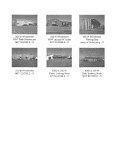
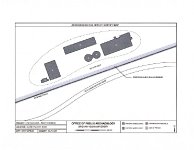
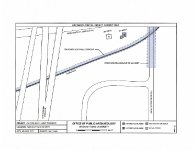
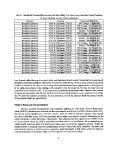
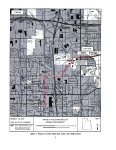
Show Study Results As previously discussed, the process of identifying historic properties within the project corridor for the purposes of compliance with Section 106 of the National Historic Preservation Act focused on three separate and distinct strategies: 1) documentation of previously identified historic linear features, 2) pedestrian survey 0 f undeveloped a reas, and 3) reconnaissance I evel survey (RLS) and recordation of historic buildings located within the area of potential effect. The results of these three identification strategies are reported separately below. Historic Linear Features Seven historic linear sites were identified during the project. These include two railroads and five canals. All three are recommended as eligible for the National Register of Historic Places under Criterion A. Property Name: Denver and Rio Grande Western Railroad (formerly Copper Belt Railroad) Site Number: 42SL293 Site Type: Railroad Site Description: Site 42SL293 is a segment of the Denver and Rio Grande Western Railroad main line, which passes through the Salt Lake Valley from north to south. The railroad, originally constructed in 1875 as the narrow gauge Copper Belt Railroad, was converted to standard gauge track in 1890. The described segment for the project corridor begins at the nexus of the Denver and Rio Grande and historic Union Pacific railways (recently converted to the dual-mode electric line utilized by the north-south TRAX system) at the intersection of 6400 S 300 W in Murray City. The segment then follows the historic alignment to the southwest for approximately 4.1 kilometers (2.6 miles), before turning south just west of the West Jordan corporate boundary. The track line is maintained and currently in use. In general, the railroad is constructed on a gently sloping grade, which occupies a raised ballast berm of coarse, angular stone. The track itself consists of modem, standard gauge rail lines and ties. Over the course of the segment, the railroad crosses over several modem culverts and bridges until it passes underneath 1-15 just prior to linking up to the Union Pacific alignment. A modern railroad bridge, probably constructed in the 1960s, runs over the Utah and Salt Lake Canal at approximately 8500 S 2800 W in West Jordan. The bridge consists of poured-in-place concrete abutments, steel I-beam structural members, and wood railroad-tie decking. A galvanized pipe rail runs along the south side of the bridge. A more recently constructed bridge, built during the late 1990's, crosses over the Bangerter Highway at approximately 8700 S, West Jordan. The bridge was constructed using poured-in-place abutments with modem steel I-beam girders. The deck also consists of poured in place concrete. Chain link fence runs along both sides of the bridge. Site IDstory: The railroad is currently operated as a dual mode trackway which accommodates both freight service under the Denver and Rio Grande Western Railroad company, as well as commuter passenger service as part of the north-south TRAX line. The first railroad constructed on this alignment was the Copper Belt narrow gauge system first constructed in 1875. The history of both the Copper Belt Railroad and the Denver and Rio Grande Western are presented below. 12 |