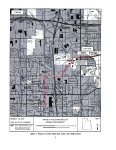
| OCR Text |
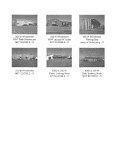
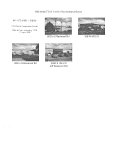
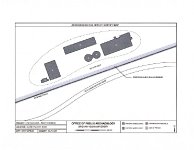
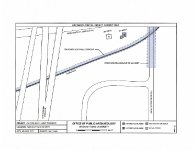
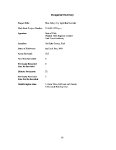
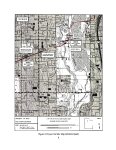
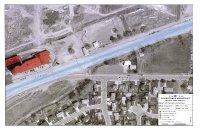
Show ore which could be transported to the down-canyon smelters at Midvale and Garfield (Carr and Edwards 1989). However, even this increased capacity was insufficient to handle all the ore generated by the mines. George (Jay) Gould, the most influential member of the board of the Union Pacific rail conglomerate (which included the Denver and Rio Grande), was reluctant to build any additional canyon track, since the company was focusing on completing the rail lines running between Salt Lake City and 0 akland, California. As a result, in 1908 the Utah Copper Company organized the Bingham and Garfield Railway, in order to more effectively haul the ore generated by the mine. The Denver and Rio Grande continued to haul ore for the mines until 1911, when the new railway was completed. Following its completion, the Denver and Rio Grande "delivered coal and materials to the mines and whatever couldn't be brought in over the Bingham and Garfield" (Carr and Edwards 1989:75). Eventually, the mining tracks saw little use, although a small amount of traffic still continues on the branch between Copperton and West Jordan, "where the Interstate Brick Company and several other modem plants are operated" (Carr and Edwards 1989:75) Today, the Denver and Rio Grande Western is considered to be one of the four major railroad systems within the state of Utah, annually carrying between 15 and 30 million gross tons of freight, mostly coal, from the Marysvale, Tintic and Pleasant Valley mining districts into Salt Lake City and Ogden (Atlas of Utah 1981). National Register Assessment: Eligible Property Name: Union Pacific Railroad (formerly Utah Southern Railroad) Site Number: 42SL344 Site Type: Railroad Site Description: This site consists ofa 20 meter (65.62 foot) long segment of the historic Utah Southern RailroadlUnion Pacific Railroad which passes through the Salt Lake Valley from north to south. The linear segment is located at the intersection of 6400 S 300 W, in a highly urbanized area of Murray City. Just north of the segment, the tracks cross above 1-215 via an overpass. Visible to the east are the Wasatch Mountains while the Oquirrh Mountains rise to the southwest. The documented segment is comprised of modem tracks and ties that occupy a raised ballast of coarse, angular stone covered by a layer of sandy loam. The depth of the ballast along the documented segment measures approximately 1.25 meters (4 feet) and is approximately 4.5 meters (15 feet) wide. No artifacts were recorded in association with the segment. This portion of the railway occupies the original, historic alignment of the railroad, but the line has been converted to modem, dual-mode electric track, and is currently in use as part of the Utah Transit Authority TRAX system. Site History: The railroad is currently known as the Union Pacific, but it was originally constructed in 1880 as the Utah Southern Railroad, which was taken over and made part of the Los Angeles and Salt Lake Railroad. Historic information for each of these three separate rail lines is presented below. Utah Southern Railroad The Utah Southern Railroad Company, with Brigham Young as president, was incorporated February 5, 1871 and operated until June 30, 1881. On July 1, 1881, the company consolidated with the Utah Central Railway, although financial control of the rail company passed to the Union Pacific Railroad in June of 1875. 14 |