| OCR Text |
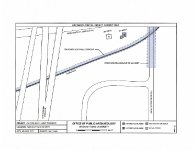
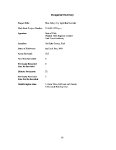
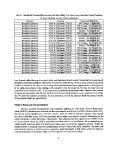
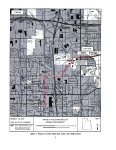
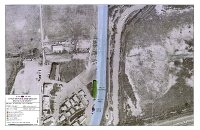
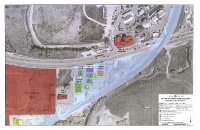
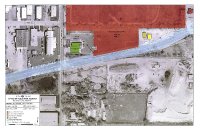
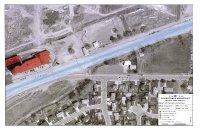
Show "were the final grand days for the long-distance passenger train on the United Pacific system. While passenger train abandonments were occurring in some parts of the country, service over the (Salt Lake route) actually improved" (Signor 1988:182), "the equal of any period in the route's history" (Signor 1988:191). Passenger traffic was particularly heavy leading to and from the Las Vegas market, both from Salt Lake City and from Los Angeles, allowing Union Pacific to maintain its commitment to passenger rail service. However, the transport of freight, particularly of coal, stock, and motor carrier trailers, provided the bulk of Union Pacific's market. During the 1960s, following a national trend of decreasing passenger rail travel, passenger services were cut back along the S111t Lake route until May 1, 1971, when all passenger rail services were turned over to the newly created AMTRAK. "Since AMTRAK had no immediate plans to continue service on the old Salt Lake route, 60 years of near continuous passenger service over the route came to a close" (Signor 1988:201). Although passenger services out of Salt Lake City, and along the Salt Lake route were discontinued, freight transport during the 1970s "witnessed the beginning of a(n) ... explosion unprecedented in peacetime history" (Signor 1988:207), and the railroad invested heavily in more powerful engines as well as markedly increasing the number of available freight cars along the line. In 1975, dispatch services for the route were centralized in Salt Lake City, and the line was controlled from "a specially designed building adjacent to the Union Pacific station" (Signor 1988:212) in Salt Lake. Following an increased interest in rail travel during the early 1980s, limited passenger service was restored along the Salt Lake route by Union Pacific. However, heavy freight, particularly coal and stock transport, as well as containerized cargo, remains as the majority market for Union Pacific's rail service along the Salt Lake to Los Angeles route. "With dealings in transportation, land, communications, and natural resources, Union Pacific's activities touch millions of lives in 19 western states. At the core of its operations, however, is the railroad and, as such, Union Pacific will continue to rely heavily on the Old Salt Lake Route as a rail transportation artery" (Signor 1988:223). National Register Assessment: Eligible Property Name: North Jordan Canal Site Number: 42SL342 Site Type: Irrigation canal Site Description: The site consists of the historic North Jordan Canal, which was first completed in 1881. The documented segment is located directly south of Gardner Village in Midvale at 7800 S and between 1100-1200 W, and consists ofa 57 meter (187 foot) long section of the canal. The section trends slightly southwest to northeast. An approximately 3.1 meter (10 foot) wide wetland corridor runs along each side of the canal. Most of the surrounding area consists of agricultural fields, with limited residential construction located to the northeast of the canal segment. The North Jordan Canal, originally identified as the Gardner Mill Race, begins on the west side of the Jordan River at the Gardner Dam. The canal has been extended several times, and currently runs from its head, through Taylorsville, and on toward the Point of the Mountain. The canal is located on, and dug into the ground surface. It crosses underneath the Denver and Rio Grande Western Railroad bridge to the south, and a 7800 S bridge to the north. The canal is dirt-walled, although there is a cement lining visible at a cement box diversion feature, which is located on the east side of the canal, approximately 24 meters 17 |