| OCR Text |
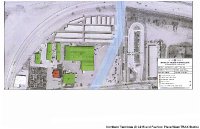
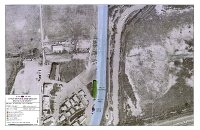
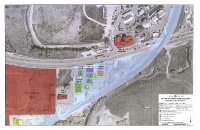
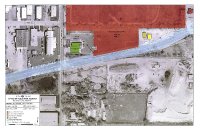
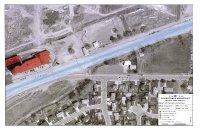
Show that occupy a raised ballast of coarse, angular stone. No artifacts were recorded in association with the segment. This portion of the railway occupies the original, historic alignment of the railroad, but t~e line has been converted to modem, dual-mode electric track, and is currently in use as part of the Utah Transit Authority TRAX system. Site History: The railroad is currently known as the Union Pacific, but it was originally constructed in 1880 as the Utah Southern Railroad, which was taken over and made part of the Los Angeles and Salt Lake Railroad. Historic information for each of these three separate rail lines is presented below. Utah Southern Railroad The Utah Southern Railroad Company, with Brigham Young as president, was incorporated February 5, 1871 and operated until June 30, 1881. On July 1, 1881, the company consolidated with the Utah Central Railway, although financial control of the rail company passed to the Union Pacific Railroad in June of 1875. The Utah Southern Railroad operated approximately 102 miles of standard gauge track, with the main line running between Salt Lake City and Chicken Creek (Juab), Utah. The railway operated as a common carrier, transporting both passengers and mine freight. When completed, Utah Southern Railroad track connected Salt Lake to the communities of Cottonwood and Sandy (1871), Point of the Mountain and Lehi (1872), American Fork and Provo (1873), York (1875) and Chicken Creek (1879). The first run on the railroad was completed on September 6, 1871 (Robertson 1986). An extension to the Utah Southern Railroad line, running from Juab (Chicken Creek) to Frisco, was begun on June 15, 1879, and completed on June 23, 1880. This 137 mile extension provided both freight and passenger rail service to the to communities ofDeseret, Milford and Frisco. The first run along the Utah Southern extension took place on December 19, 1879. This line was also consolidated as part of the Utah Central Railway Company on July 1, 1881, which itself became part of the Los Angeles and Salt Lake Railroad system in 1890 (Robertson 1986). "As the Utah Southern Railroad built southward from Salt Lake City, several other feeder lines were built off it. In 1872, ... a three-foot narrow gauge pike named the Wasatch and Jordan Valley Railroad" (Carr and Edwards 1989:84) was built in order to carry granite from the Little Cottonwood Canyon quarries down to the temple site in Salt Lake City. "Temple granite was transferred from the narrow gauge W&JV to the standard gauge Utah Southern Railroad in Sandy. The Utah Southern then transported it to the Utah Central Railroad depot on South Temple. The already existing streetcar track up South Temple was relaid with much heavier rail, a switch was installed, and a spur was run onto the east side of the Temple Block paralleling Main Street, so that the stone could be delivered right to the construction site" (Carr and Edwards 1989:84). Los Angeles and Salt Lake Railroad The Los Angeles and Salt Lake Railroad Company, incorporated on August 16, 1916, followed the formation and consolidation of the companies known as the Los Angeles Terminal Railway Company (January 1 1891 to March 31 1901) which ran rail lines from Los Angeles into Pasadena and the other foothill communities, and the San Pedro, Los Angeles and Salt Lake Railroad Company (March 20 1901 to August 25, 1916), a company formed in order to continue the interrupted construction of rail lines running directly between Salt Lake City and Los Angeles, along a route closely following the old Mormon Trail (Poll et al. 1989). Senator William Andrews Clark, a strong supporter of the railway and already heavily invested in Los Angeles, was the prime mover in this venture. However, the renewal of the plan to build 11 |