| OCR Text |
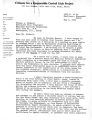
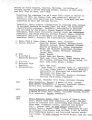
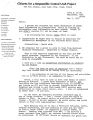
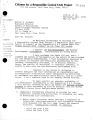
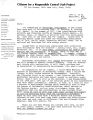
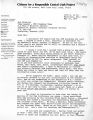
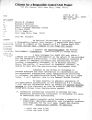
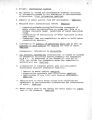
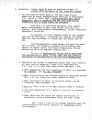
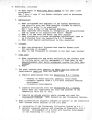
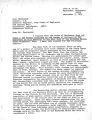
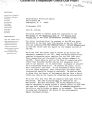
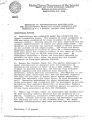
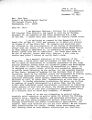
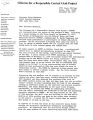
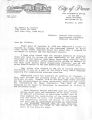
Show 1^5 N. 10 St. Manitowoc, Wisconsin 54220 November 2k, 1979 Mrs. Jane Yarn Council on Environmental Quality 722 Jackson Place, N.W. Washington, D.C. 20006 Dear Mr. Yarn: I am National Chairman, Citizens for a Responsible CUP (Central Utah Project), and hoped to send you by Tuesday, November 27, my comments on the Final Bonneville M & I EIS of the CUP. I cannot meet this deadline for reasons stated below. I am enclosing my comment to the Bonneville M & I Draft EIS, of May 17, 1979, and answers to it which are printed in Volume II of the Final EIS. My comments and questions were all directed at the non-compliance of the Bureau of Reclamation either with the intent of the Carter Administration Water Policy or with trying to implement it. In answering my questions, the Bureau claims they are in compliance. The issue here seems to be one of opinion, rather than fact. However, I will have to review each point I raised to verify their claim. % As a general evaluation of the adequacy of the Final EIS, I would state that development of this Unit of the CUP is based on utilization of unlimited quantities of new, high quality mountain stream water for unlimited growth and development of the State of Utah. The proposal is exponential in impact. It is designed to exploit water, wildlife and recreation resources on public lands belonging to the nation, for the economic benefit of the State. Instead of working for the Multiple Uses of public resources, which is the national policy for management of federal lands, the unique watershed resources of the Uinta Range are being cynically developed, their natural character being replaced, substituted or lost, at great cost, unnecessarily at this time in our history. In basing population predictions for water use in Utah on numbers of people anticipated by a given time, say the year 2,000, with industrial water requirements calculated on indiscriminate amounts of acre feet of water, the Bureau and developers in the State are out of tune with contemporary thinking about water as a resource able to serve many purposes, if managed. Those of us who are attempting to protect unique mountain water resources on public lands for stream fly fishing, esthetic value, riparian habitat, and watershed protection, and who can see this being accomplished without depriving the State, through conservation and modern technological applications, are angered when such measures are not put into effect. We are angered when justifications for costly, federal water development are self serving since we know cheaper alternatives are available. |